7 Clever Uses for Motion Sensors You Haven’t Thought of Yet
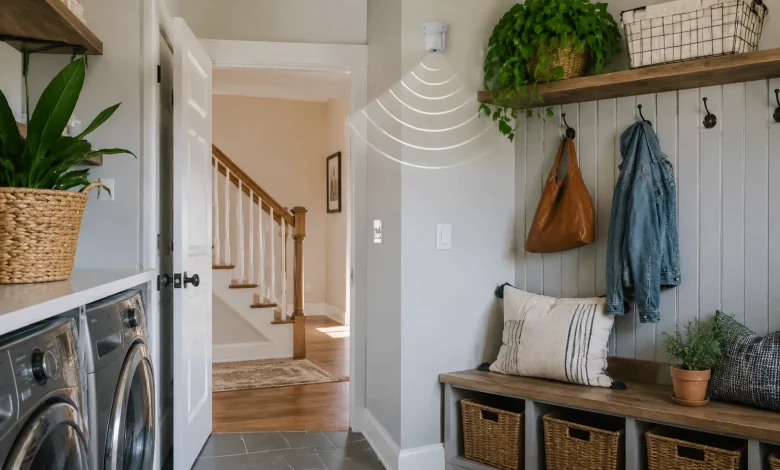
Most people hear “motion sensor” and immediately picture one thing: a light that clicks on when you walk into the garage at2a.m. That’s a fair association. For decades, motion-sensing technology lived almost exclusively in the realm of security systems and automatic lighting. Useful, sure. But also a little boring, given what these devices are actually capable of.
The truth is that a motion sensor is essentially a small, tireless observer. It notices when something moves, registers that change, and can be wired physically or digitally to trigger almost any response you design for it. That’s a deceptively powerful premise. And as smart home platforms have matured and sensors have gotten cheaper, a whole ecosystem of unexpected applications has quietly emerged. Some of them are practical in ways that make you wonder why you never thought of it. Others are almost philosophical reimagining what it means to make a space respond to the people inside it.
Here are seven uses worth knowing about.
The Bathroom That Knows When to Exhale
Bathroom ventilation fans are almost universally misused. Most people either forget to turn them on, or they leave them running for an hour after they’ve left the room. Neither approach is good for air quality or energy bills.
A motion sensor paired with a humidity sensor or even just a motion sensor on a smart switch with a configurable delay solves this quietly and completely. The fan activates when the room is occupied, runs for a programmed window after the last detected movement, and then shuts off. No manual input. No wasted electricity. The house breathes correctly without anyone thinking about it.
It’s a small thing. But small things done well are the backbone of a home that actually functions.
Passive Wildlife Monitoring in Your Own Backyard
Here’s one that appeals to a certain kind of curiosity. Motion sensors connected to outdoor cameras not for security, but for observation can turn a backyard into a quiet research station. Set the sensor to trigger a camera during overnight hours, and you’ll likely discover that your property is considerably more alive after dark than you realized.
Raccoons, foxes, deer, the occasional opossum. Bird species that only pass through during migration. Depending on where you live, the footage can be genuinely surprising. Some homeowners have documented animals that wildlife biologists in their area didn’t know were present locally.
This isn’t a security application at all. It’s about learning something. The sensor becomes a tool for attention a way of paying witness to activity that happens just outside the edge of human awareness.
Knowing When the Kids Actually Got Home
Parenting in the age of smartphones should theoretically mean constant contact. In practice, teenagers are not always the most reliable communicators. A motion sensor near the front door or in an entryway, connected to a notification system, sidesteps the whole dynamic.
The sensor detects movement. A quiet push notification goes to a parent’s phone. No interrogation required, no expectation of a response text that may or may not come. The information arrives passively, without making it feel like surveillance.
That distinction matters. There’s a meaningful difference between a home environment that silently confirms safety and one that demands constant accountability. Motion sensors can sit on the right side of that line, provided the setup is transparent and the intent is clear.
Protecting Fragile or Valuable Items
Most people think of motion-based alerts in terms of intruders someone entering a room they shouldn’t. But the same logic applies at a much smaller scale. A motion sensor pointed at a wine rack, a display case, a piece of art, or even a medication cabinet can send an alert the moment something in that specific zone is disturbed.
This is particularly useful in households with young children or when you have contractors or houseguests moving through spaces. It’s not about distrust so much as awareness. You set a sensor, you go about your day, and if something triggers it, you know.
Some users have applied this concept to pet-restricted areas keeping dogs off furniture they’re not supposed to occupy, or alerting owners when a cat has found its way somewhere inadvisable. The sensor doesn’t enforce anything on its own. It just observes and reports. What you do with that information is up to you.
Smarter Energy Management Room by Room
Programmable thermostats were a genuine leap forward in home energy efficiency. But they operate on schedules, and schedules are approximations of real behavior. People get sick and stay home. Routines shift. Guests arrive. The house changes, and the thermostat doesn’t know.
Motion sensors feeding into a smart home system can update the system’s understanding of which rooms are actually occupied in real time. A room that hasn’t registered movement in two hours can have its heating or cooling dialed back automatically. When someone walks in, the system adjusts. This is occupancy-based climate control rather than schedule-based, and the efficiency gains over time can be substantial.
It’s also just more comfortable. A house that responds to where you actually are feels more alive than one running a static program.
The Driveway as an Early Awareness System
This one tends to get filed under security, but there’s a broader framing that’s worth considering. A motion sensor at the end of a driveway or along a path leading to a front door gives a household a few extra seconds of awareness before anyone rings a bell or knocks.
That buffer is useful in ways that go beyond crime prevention. If someone is approaching with groceries, you can have the door open before they need a free hand. If a delivery is being made, you can step out in time to receive it. If an elderly family member is expecting a visitor, that sensor notification is a quiet heads-up that doesn’t require shouting down a hallway.
Distance sensors and outdoor motion detectors designed for driveways are widely available and can connect to most smart home platforms. The range can usually be configured so that passing pedestrians or street traffic don’t generate false alerts.
Turning Absence into Action
This last one requires a small shift in thinking. Most motion sensor applications are triggered by presence something moves, something happens. But absence is equally informative.
If a motion sensor in a living space hasn’t registered movement for an unusually long time, that silence is data. For households caring for elderly relatives, or for people who live alone and have family checking in remotely, this kind of passive monitoring can provide meaningful reassurance. An alert that says “no motion detected in the kitchen since 6 a.m.” tells a story without requiring anyone to check in explicitly.
Some dedicated health-monitoring platforms have built systems entirely around this principle. But it doesn’t require a specialized product. A standard motion sensor, a smart home hub, and a simple automation rule that fires if no movement is detected within a configurable window is enough to build a lightweight but functional wellness check into a home.
The motion sensor in this application isn’t watching for something to happen. It’s watching for something not to happen. That inversion is small in technical terms and potentially significant in human ones.
The thread running through all of these is the same: a sensor is only as useful as the imagination behind it. The hardware is simple. What changes is the question you ask of it not just “who entered the room?” but “what does this space need to know about the people inside it, and what should it do with that knowledge?”
That’s a more interesting question. And the answers, it turns out, are more varied than a garage light flickering on in the dark.