Inside the Mind of ‘Quiet Luxury’: Why Silence is the Ultimate Flex
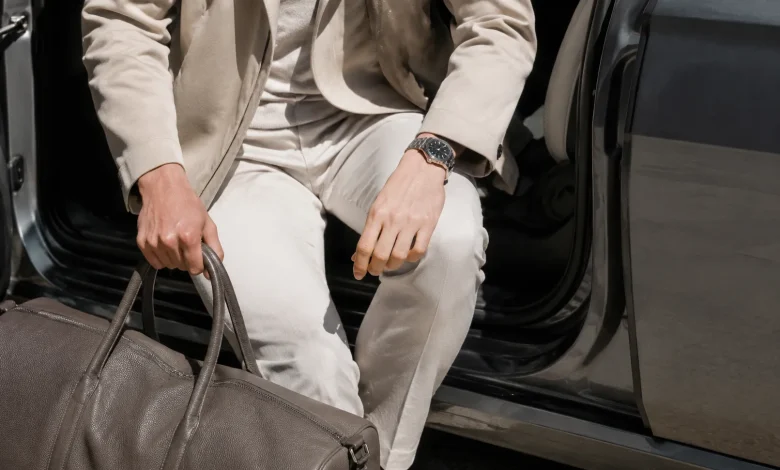
The Loudest Statement You Never Hear
There’s a particular kind of jacket that costs four thousand dollars and looks, to the untrained eye, like something you might find folded on a table at a mid-range department store. No visible logo. No hardware that catches the light. The color is what a paint brand would call “stone” or “warm ecru” a shade so carefully non-committal that it barely registers as a choice at all. And that, of course, is precisely the point.
Quiet luxury isn’t new. What’s new is that the rest of the world finally noticed it and in noticing it, began the slow process of trying to decode what it actually means, why it works, and whether it’s something that can be bought or whether it has to be, in some more complicated way, earned.
The term exploded into mainstream vocabulary somewhere around 2022and2023, carried largely by the cultural wake of HBO’s Succession, a show whose costume department understood something that most fashion commentary misses entirely: true power doesn’t announce itself. The Roy family didn’t strut through boardrooms in printed silk or logo-covered leather. They wore cashmere in shades of grey and navy. They dressed like the weather in a Scandinavian country subdued, serious, a little cold. And audiences read it immediately as dominance.
When Branding Became the Tell
To understand quiet luxury, you have to first understand what it’s reacting against.
The 2010s were peak logo culture. Streetwear fused with luxury in ways nobody fully predicted, and suddenly the most coveted items were the ones that screamed their own names back at you. A belt with letters the size of your fist. A monogram so dense it functioned less as pattern and more as wallpaper. This wasn’t accidental it was aspirational signaling in its most naked form. The logo was proof of purchase. It was the receipt worn on the body.
For a certain segment of wealthy consumers, this presented a problem. Not a moral one, exactly more of a tonal one. When the same belt appears on a teenager saving up for months and on a hedge fund partner, the belt stops doing the social work it once did. Exclusivity, in the traditional sense, had been disrupted. The logo that was supposed to separate you from the crowd had become the crowd.
What emerged in response wasn’t minimalism as an aesthetic philosophy it was minimalism as a new and more sophisticated form of gatekeeping. The signal shifted from “I can afford this label” to “I don’t need you to see my label.” That shift is everything.
The Semiotics of Restraint
Here’s what makes quiet luxury psychologically interesting: it operates on a kind of insider knowledge. Recognizing a piece of Loro Piana, or understanding why a particular shade of off-white on a well-cut trouser reads as expensive, requires a specific kind of cultural fluency. It’s not the fluency you can acquire by looking something up it’s the fluency that comes from years of proximity to wealth, taste, and a certain world.
This is, academically speaking, what Pierre Bourdieu spent a career trying to articulate: the difference between economic capital and cultural capital, and the way the latter functions as its own form of currency. Knowing that a fabric drapes a certain way because of the weight of its wool, knowing the difference between a collar that lies correctly and one that doesn’t these are pieces of embodied knowledge. They can’t be faked easily, and they can’t always be purchased directly. The aesthetic of quiet luxury is, in a real sense, an aesthetic of cultural inheritance.
That’s part of why it triggers such complicated feelings. There’s something admirable about restraint. There’s also something quietly ruthless about a system designed so that only certain people can read the code.
What the Wardrobe Is Actually Saying
Strip away the theory and you get to something more human: the quiet luxury uniform is a very precise communication strategy.
It says, I don’t need your validation. It says, I was not dressed to impress you. It says, I have so little anxiety about my position that I can afford to wear beige. That last one sounds almost absurd, but spend any time in environments where status competition runs hot and you’ll recognize how true it is. The most socially anxious people in the room are usually wearing the most. The person who walks in wearing almost nothing texture, cut, a watch that only a specific subset of people would recognize is communicating a kind of calm that is itself the signal.
This is why quiet luxury resonates so strongly as a concept even with people who will never spend three hundred dollars on a plain white T-shirt. It’s not really about the clothes. It’s about the psychological posture the clothes represent. The lack of need for external confirmation. The ability to exist in a room without performing for it.
In a culture saturated with personal branding, content optimization, and the relentless pressure to make yourself legible to an algorithm, silence looks radical. Not performing looks, somehow, like the ultimate performance.
The Democratization Problem
And then comes the complication that always arrives when a subculture gets absorbed into the mainstream.
Once quiet luxury became a recognizable trend hashtagged, analyzed, turned into shopping guides and Pinterest boards it began to undermine itself. You can now buy “quiet luxury inspired” pieces at fast fashion prices. There are YouTube tutorials on how to assemble the aesthetic on a budget. The very moment an aesthetic of invisibility becomes visible, it starts to lose its function.
The people who actually occupy the world quiet luxury was born from don’t think of themselves as practicing a trend. They don’t call their wardrobe anything. They just wear what they wear because it’s what has always surrounded them. The second something needs a name, a certain group has already moved on or more accurately, never registered that a movement had happened at all.
This is the inherent paradox: the loudest proof of having mastered quiet luxury is not knowing it exists as a concept.
Silence as Aspiration
What the quiet luxury moment reveals, more than anything, is a widespread exhaustion. People are tired of noise not just sonic noise, but visual noise, social noise, the constant bombardment of things competing for their attention and asking them to compete in return. The appeal of a clean, neutral, uncommonly well-made coat isn’t just snobbery. It’s a fantasy of stillness.
There’s a reason the aesthetic overlaps so heavily with “old money” imagery and the visual language of European understated wealth. It’s not just class aspiration it’s temporal aspiration. The fantasy of having been wealthy long enough that wealth no longer feels like something to announce. The fantasy of stability, of a self that doesn’t need constant maintenance or visibility.
Whether or not that fantasy is honest, or available, or even desirable in full the feeling it points toward is real. The desire to stop performing. To wear something that costs what it costs and simply stand in a room and not need anything from it.
That desire quiet, expensive, impeccably tailored is the flex. And it’s been working for a very long time.