Your Birthday and Pet’s Name Are Making You an Easy Target
The Question You’ve Already Answered Without Knowing It
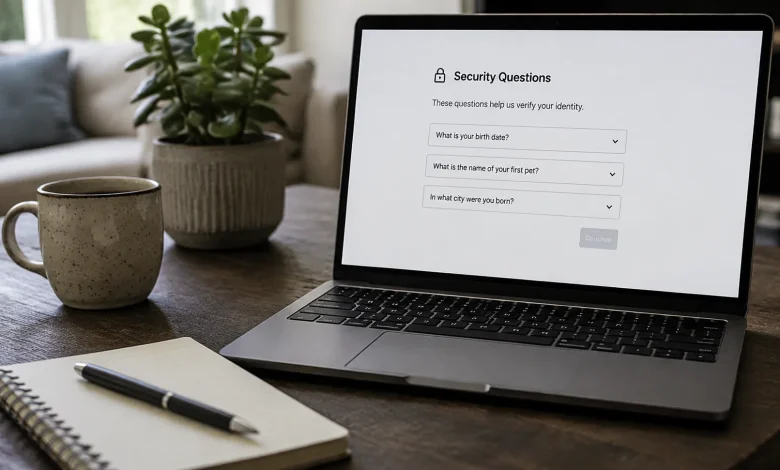
Think about the last time you set up a new account online. You picked a username, created a password, and then almost without thinking you answered a few security questions. What’s your mother’s maiden name? What was the name of your first pet? What city were you born in? You typed the answers in, clicked confirm, and moved on with your life.
That small, forgettable moment is exactly what attackers are counting on.
Most people approach online security as if the primary threat is some shadowy hacker running brute-force algorithms against a server farm. The reality is far more mundane and, in some ways, far more unsettling. The biggest vulnerability in most people’s digital lives isn’t a software flaw. It’s the birthday you broadcast every year on Facebook, the pet name in your Instagram bio, and the anniversary you’ve tagged in a hundred photos. It’s the personal data you handed out voluntarily, publicly, and with a smile.
How Attackers Actually Think
Social engineering manipulating people rather than systems has been the dominant attack vector for years. And it works precisely because it exploits something we can’t patch: human behavior.
When a skilled attacker targets someone, they don’t start with code. They start with Google. Then LinkedIn. Then Instagram. Then the local newspaper archives, public property records, maybe a quick search on a people-finder site. Within an hour, they can often piece together a surprisingly complete picture: your full name, rough age, city of residence, family members’ names, where you went to school, what kind of dog you have, and when your birthday is.
Now think about your password. Or your security question answers. Or the PIN you chose because it was easy to remember. A lot of people’s passwords contain their birth year. A lot of people’s security answers are, quite literally, sitting in their public social media profiles. The attacker doesn’t need to hack anything. They just need to read.
This is sometimes called OSINT open-source intelligence and it’s a discipline with legitimate uses in journalism, law enforcement, and corporate security. But the same techniques that help investigators find missing persons or expose fraud also help scammers target regular people. The data is the same. The only difference is intent.
The Birthday Problem Goes Deeper Than Your Password
Birthdays deserve special attention because they’re so normalized as shared information that most people never question it. Entire social rituals have been built around broadcasting your birth date. Facebook sends reminders to your network. Instagram gives you a birthday cake emoji. Friends post on your wall. It feels warm and communal, and in one sense it is.
But your date of birth is also a core verification field in a staggering number of systems. Banks use it. Insurance companies use it. Government portals use it. When a customer service representative needs to verify your identity, one of the first things they’ll ask for is your date of birth. What that means, in practice, is that anyone who knows your birthday and your name, and maybe a few other details has already cleared the first security checkpoint that stands between them and your account.
This is a social engineering attack in its simplest form. A caller pretending to be you, armed with your full name, date of birth, and the last four digits of your social security number (which can often be inferred from when and where you were born, pre-2011), can talk their way into accounts with nothing but confidence and preparation. No malware required.
Pets, Schools, and the Mythology of the “Secret” Question
Security questions were a reasonable idea in theory. In practice, they’ve become a master class in false security. The problem isn’t the concept it’s the questions themselves, and the way real people answer them.
“What was the name of your first pet?” This is probably the single most catastrophic security question in widespread use, and the reason is simple: people name their pets publicly and often. The dog’s name is on the vet records, in the birthday posts on social media, in the comments under every photo where someone asks “aww, what’s his name?” It’s tattooed on Instagram. It’s in the caption of photos that have been liked, shared, and indexed by search engines.
“What high school did you attend?” LinkedIn literally has a field for this. So does Facebook.
“What was the make of your first car?” That one might seem safer until you consider that plenty of people have shared this nostalgically on Twitter, in forum posts, or in those chain-style Facebook questionnaires that circulate every few months asking “What was your first car? Your first job? Your first concert?” Those posts are gold for anyone building a profile on you.
The deeper issue is that security questions operate on the assumption that some information is inherently private. But almost nothing is truly private anymore, especially for people who have been online for a decade or more. Information has a way of accumulating across platforms, aggregating in databases, and surfacing in ways you never anticipated when you first shared it.
The Aggregation Problem
Here’s something that doesn’t get talked about enough: none of this information needs to be particularly sensitive on its own. That’s the trap. You might think, so what if someone knows my birthday? So what if they know my dog’s name? Neither of those things alone can do much damage.
But that’s not how it works. Data points combine. Each small fact about you adds to a composite picture that becomes increasingly useful to someone with bad intentions. Your name plus your city plus your birthday plus your employer plus your email address that’s often enough to attempt an account takeover, apply for credit in your name, or craft a highly convincing phishing message that bypasses your instincts because it references real details of your life.
This is the aggregation problem in information security, and it’s why the “nothing to hide” argument collapses so quickly under examination. You’re not protecting any one piece of information. You’re protecting the sum of all of it.
The Phishing Upgrade
Generic phishing those emails from a Nigerian prince or a fake FedEx delivery notice still works on a lot of people, but even moderately security-aware users have learned to spot the signs. Misspelled domains. Urgent, threatening language. Odd formatting. Most people know to be at least a little suspicious.
What they’re not ready for is spear phishing: targeted attacks that use personal information to construct messages that feel genuine. Imagine receiving an email that correctly references your employer, mentions your dog by name, and notes that your subscription is expiring shortly before your birthday. Each of those details on its own seems harmless. Together, they create an email that feels like it was written by someone who knows you because in a sense, it was. Just not a person you’d want in your life.
As AI-generated content becomes cheaper and better, these attacks are scaling up. The era of the obviously fake phishing email is fading. What’s replacing it is algorithmically personalized social engineering, built from the data trail you’ve been leaving across the internet for years.
What You Can Actually Do
None of this requires becoming a paranoid hermit who deletes every social account and pays exclusively in cash. But it does require a shift in how you think about everyday sharing.
Stop using real answers to security questions. Use them as a second password instead a random string that you store in a password manager. Nobody will ever correctly guess that your first pet’s name was X7#mK29. Keep a note of the fake answer somewhere secure; just never use the real one.
Be thoughtful about what’s permanently attached to your name in public spaces. There’s a difference between sharing a birthday post in a private group and having your date of birth listed on your public Facebook profile. One requires effort to find; the other requires a Google search.
Consider what information you’re volunteering in low-stakes situations. Those “get to know you” posts that ask for your first car, your childhood nickname, your mother’s maiden name these templates are sometimes deliberately designed to harvest exactly the kind of data that security questions ask for. Not always. But sometimes.
Think about aggregation, not individual pieces. Before you share something, the question isn’t whether this one fact is dangerous. The question is what becomes possible when someone combines it with everything else you’ve already shared.
Your birthday and your pet’s name feel like the most innocuous things in the world. That’s the point. The information that’s easiest to share carelessly is often the information that was always worth protecting.