Cryptocurrency Scams: How to Keep Your Digital Wallet Safe
There’s a certain irony baked into crypto’s promise of financial freedom. The technology was built, in part, to cut out the middlemen the banks, the gatekeepers, the institutions that could freeze your account or reverse your transaction. But that same autonomy means there’s no one to call when something goes wrong. No fraud department. No chargeback. No federal deposit insurance. When the money leaves your wallet, it’s gone.
Scammers figured this out early.
The numbers are staggering and getting worse. According to the FBI’s Internet Crime Complaint Center, Americans lost over $5.6 billion to cryptocurrency fraud in 2023 alone a45% increase over the prior year. And that figure almost certainly undercounts reality, because crypto scams carry a particular shame that discourages victims from reporting. People who consider themselves financially savvy, technically literate, even skeptical by nature, get taken. The embarrassment runs deep.
Understanding why starts with understanding how these schemes actually work not just the mechanics, but the psychology behind them.
The Long Con Has Gone Digital
The most damaging crypto scams today aren’t smash-and-grab operations. They’re slow, patient, and emotionally sophisticated. One category that’s exploded in recent years is what investigators call “pig butchering” a term that sounds crude but describes something genuinely insidious. The scammer builds a relationship over weeks or months, often starting with a wrong-number text or a LinkedIn message. They become a confidant, sometimes a romantic interest. They talk about their own crypto “success.” Eventually, they introduce you to a platform one they control entirely where your deposits show impressive returns right up until the moment you try to withdraw.
Victims of these schemes don’t lose hundreds. They lose retirement savings. Second mortgages. Their kids’ college funds. One documented case from California involved a retired engineer who transferred $1.2 million over four months, convinced he was investing alongside a woman he’d met online and grown to trust completely. The platform looked real. The profits looked real. None of it was.
What makes pig butchering so effective isn’t technical sophistication it’s human patience and the exploitation of loneliness. It works because the scammer invests in you before asking you to invest in anything.
Phishing Has Gotten Eerily Good
On the less elaborate end of the spectrum sits phishing but don’t let the familiar name breed complacency. Crypto phishing has evolved well beyond the broken-English emails of the early internet era. Today’s attacks arrive as Google ads that appear above legitimate exchange websites in search results. They come as MetaMask pop-ups on cloned sites with URLs that differ from the real thing by a single character. They show up as Discord messages from accounts impersonating project founders, complete with verified-looking badges.
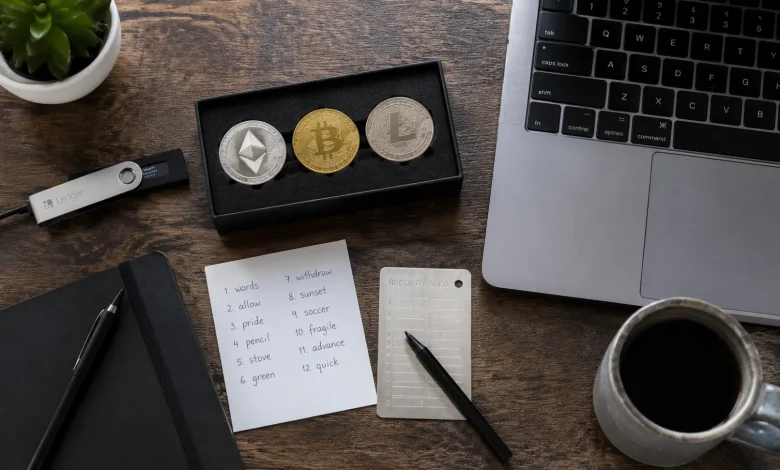
The goal is always the same: get you to connect your wallet to a malicious site, or hand over your seed phrase. That12- or 24-word recovery phrase is the master key to everything in your wallet. Any legitimate platform, app, or person will never ask you for it. Full stop. If someone is asking for your seed phrase regardless of the reason, regardless of how official they sound you are being robbed.
Hardware wallets add a meaningful layer of protection here. Devices like Ledger or Trezor store your private keys offline, which means a phishing site can’t extract them even if you accidentally connect. It’s not a perfect defense, but it dramatically narrows the attack surface.
The “Guaranteed Returns” Tell
Crypto’s volatility is part of its appeal for speculators, which creates a strange psychological opening: the market feels unpredictable enough that people are willing to believe someone has cracked the code. This is how yield-farming scams and fake trading bots thrive. They promise consistent, extraordinary returns 1% per day, 30% per month with language that sounds technical enough to seem credible.
The math on these claims should set off alarms immediately. A 1% daily return compounds to over3,700% annually. No legitimate investment produces that. But when returns are framed in the context of a volatile, rapidly moving asset class, people suspend the skepticism they’d apply anywhere else.
Rug pulls operate on a related psychological lever. A new token launches with a slick website, an active Telegram community, and a whitepaper full of jargon. Early buyers watch the price rise as more people pile in which is real, because the scammers are deliberately pumping the price. Then the founders drain the liquidity pool and disappear. The token becomes worthless overnight. The 2021 Squid Game token is the most famous example it climbed 45,000% in days before the creators walked away with an estimated $3.4 million. People knew it had no utility. They bought it anyway because the chart was going up.
What Due Diligence Actually Looks Like
The phrase “do your own research” gets thrown around in crypto circles so often it’s become a meme sometimes used sincerely, sometimes sarcastically, occasionally as a disclaimer before someone shills a token they already hold. But actual due diligence has specific, practical components that separate it from wishful Googling.
For any platform you’re considering sending money to, start with the boring stuff. Is the company registered anywhere? Do the team members have verifiable professional histories, or do their LinkedIn profiles have six connections and no employment history before the project launched? Has the smart contract been audited by a reputable third-party firm and if so, does the audit actually exist when you go look for it, rather than just a logo on a website? Is the liquidity locked, or can the founders drain it at will?
For wallets and exchanges, the checklist shifts. Use only exchanges that have clear regulatory standing in your jurisdiction and a documented history of handling security incidents responsibly. Enable two-factor authentication and make it app-based, not SMS-based, since SIM-swapping attacks have become a reliable tool for targeting crypto accounts. Store the bulk of your holdings in self-custody rather than leaving them on an exchange, because exchanges get hacked, go bankrupt, and sometimes simply freeze withdrawals.
The seed phrase issue bears repeating with more force: write it down on paper. Store it somewhere physically secure. Do not photograph it. Do not type it into any app, website, or note-taking service. Do not share it with anyone claiming to be customer support. This isn’t paranoia it’s the only backup mechanism that exists for your entire wallet.
When the Feeling Says Run
There’s a common thread through nearly every crypto scam story, and victims often describe it in retrospect with the same language: something felt off, but they ignored it. The returns were too consistent. The urgency was artificial. The person on the other end was always available, always encouraging, never willing to let the conversation pause.
Pressure is a tool. Urgency is a tool. Any situation in which you’re being rushed to move money where the opportunity is closing, where the price is about to jump, where someone will lose access if you don’t act now is almost certainly engineered. Legitimate investments don’t evaporate in24 hours. Real opportunities don’t require you to suspend your judgment to access them.
The decentralized architecture of blockchain means the responsibility for security falls on the individual in a way most financial systems don’t. That’s not a flaw to be fixed it’s a design choice with real tradeoffs. Understanding those tradeoffs, and taking them seriously, is the foundation of protecting what you hold.