Are Your Smart Home Devices Spying on You?
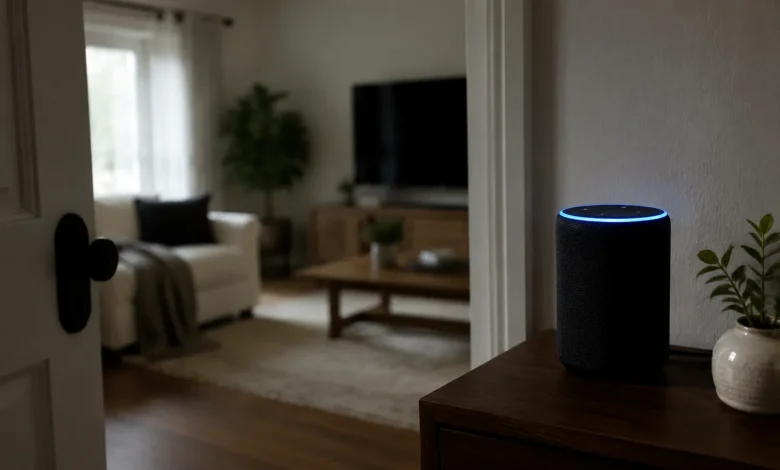
Every morning, millions of Americans wake up and say “Hey” to a small cylinder on their nightstand. They ask it about the weather, tell it to play music, order it to dim the lights. The device obeys instantly. It feels like convenience. It feels like the future. But somewhere between the command and the response, something else is happening and most people would rather not think too hard about it.
The question isn’t hypothetical. It never really was.
The Microphone That Never Sleeps
Smart speakers, smart TVs, smart doorbells, smart thermostats the word “smart” has become a kind of marketing absolution, a way of making surveillance feel like a service upgrade. These devices don’t just respond to you. To respond to you, they have to listen for you. And that distinction matters more than the industry likes to admit.
Amazon’s Echo, Google’s Nest, Apple’s HomePod all of them rely on what’s called a “wake word” system. The device is theoretically dormant until it hears “Alexa,” “Hey Google,” or “Hey Siri.” Theoretically. In practice, researchers and journalists have repeatedly documented accidental activations triggered by words that merely sound similar. In2018, an Oregon couple discovered their Amazon Echo had recorded a private conversation and emailed it to a contact in their address book. Amazon called it “an unlikely chain of events.” The couple called it a violation. Both were right.
The recordings don’t just vanish either. They often travel to company servers for processing, where human reviewers may listen to them as part of “quality improvement” programs. Apple, Amazon, and Google have all faced scrutiny for employing contractors to review voice clips. Each company eventually offered opt-outs after the stories broke not before.
What Gets Collected Is Only Part of the Story
Voice data is the obvious concern, but it’s almost the distraction. The deeper surveillance happens at the level of behavior. Your smart thermostat knows when you leave home and when you come back. Your smart TV tracks which shows you watch, for how long, and at what time. Your smart doorbell builds a visual log of every person who approaches your house. Your smart light bulbs, if you’re running them through an app, can reveal your sleep schedule with startling accuracy.
None of this data exists in isolation. That’s where it gets interesting and unsettling. The companies behind these devices are not primarily hardware companies. Amazon sells consumer goods and cloud infrastructure. Google sells advertising. The smart devices are endpoints in a data collection ecosystem, and the patterns they generate feed into profiles that become the real product.
A 2020 study from researchers at Imperial College London and UC Berkeley analyzed data flows from popular smart home devices and found that devices from Amazon and Google regularly contact servers owned by advertising and analytics companies, often outside the user’s awareness. Some devices contacted over a hundred distinct internet addresses in a single day. The study’s authors noted that even encrypted traffic could reveal behavioral patterns through timing and frequency analysis.
The Security Layer Nobody Talks About
There’s another dimension that the privacy conversation often skips past: security vulnerabilities. A device that collects data is also a potential entry point into your network and your life.
In 2019, a security researcher demonstrated that certain models of smart light bulbs could be exploited to infiltrate a home Wi-Fi network. The vulnerability worked by essentially tricking a hub device into accepting a malicious firmware update, which then spread across connected devices. Philips Hue patched the flaw after the research was published. The question worth sitting with is how many similar vulnerabilities exist right now, undiscovered, or discovered by people who aren’t filing responsible disclosure reports.
Smart locks present an even more visceral risk. Several popular brands have been found to transmit unlock codes in plaintext or use predictable encryption keys. A device designed to make your home more secure can, under the right circumstances, do the opposite. The attack surface of a connected home is proportional to the number of connected devices in it and the average American household now contains more than twenty.
The Privacy Policy as Fiction
Most users clicked “I agree” on a privacy policy somewhere along the way. Almost none of them read it. This is not a character flaw it’s rational behavior in a world where the average person would need approximately 76 work days per year to read every privacy policy they encounter. The policies are long by design. They’re comprehensive enough to give legal cover and vague enough to permit nearly anything.
Ring, the Amazon-owned doorbell company, spent years quietly sharing user footage with law enforcement agencies without requiring warrants or user consent. Between 2019 and 2022, Ring’s own data showed it had fulfilled thousands of requests from police departments. Users who believed their doorbell footage was private discovered they had, somewhere in the policy, authorized something quite different. Congress eventually pushed for more disclosure. The partnerships continued.
Vizio settled a Federal Trade Commission case for $2.2 million after it was found to have collected viewing data from 11million smart TVs without adequately disclosing the practice. The company was tracking not just what users watched on streaming apps but what they watched on cable and antenna second-by-second, mapped to demographic and geographic profiles, then sold to advertisers.
The Argument for the Other Side
To be fair, the industry’s defenders have real points to make. The convenience these devices provide is genuine. A well-integrated smart home system can meaningfully improve quality of life for elderly users or people with disabilities. Energy monitoring features have helped households reduce consumption. And the catastrophic data breach scenario someone weaponizing your thermostat data against you in a serious way remains, for most people, more theoretical than real.
There’s also the comparison problem. Your smartphone already knows more about you than any smart speaker does. Your credit card company has mapped your purchasing behavior for decades. If you’ve accepted those trade-offs and almost everyone has the incremental privacy cost of a connected home is arguably modest.
But this argument has a ceiling. The accumulation of data points is not linear in its risk. At some threshold, the combination of behavioral data, location data, biometric data, and home data creates a profile with qualitatively different power power over insurance pricing, lending decisions, employment background checks, and eventually political and social sorting. We are not there yet. We are building toward it with every firmware update and terms-of-service revision.
Practical Ground
The paranoid response rip everything out, return to analog is not the only alternative to passive acceptance. Some steps genuinely reduce exposure without requiring a complete lifestyle reversal.
Running smart devices on a separate network segment, isolated from computers and phones, limits the damage a compromised device can do. Reviewing and deleting accumulated voice histories in the apps that manage smart speakers removes data that would otherwise sit indefinitely. Choosing devices from manufacturers who offer local processing where data never leaves the home network is increasingly viable as the market matures. Home Assistant, an open-source smart home platform, allows users to run an entire smart home ecosystem without sending a single data packet to a third-party server.
None of this is seamless. The frictionless experience is the product. The moment you start making deliberate choices about data hygiene, you introduce inconvenience, and inconvenience is what these companies have spent billions teaching you to avoid.
That’s not an accident. That’s the design.
The devices in your home may not be spying on you in the way a government informant would with intent, with specific targets, with a handler receiving reports. But they are watching. They are listening. And the data they generate is worth enough to enough powerful institutions that “convenience” starts to feel like a price tag rather than a feature. What you decide that price is worth that’s still, for now, your call to make.