Are Smart Locks Safe? What Locksmiths Won’t Tell You
Are Smart Locks Safe? What Locksmiths Won’t Tell You
The Lock on Your Door Has Gone Digital But Has Security?
There’s a quiet revolution happening at the front doors of American homes. The traditional deadbolt, that reassuringly heavy chunk of brass that’s kept families safe for generations, is being replaced by something that glows, beeps, and connects to your Wi-Fi. Smart locks are everywhere now in new construction, in renovated apartments, in the houses of tech-savvy homeowners who love the idea of never fumbling for keys again. The market is booming. The reviews are mostly glowing. And the locksmiths? A lot of them are selling these devices right alongside the old-fashioned ones.
But here’s what the sales pitch leaves out.
What a Smart Lock Actually Is (And Isn’t)
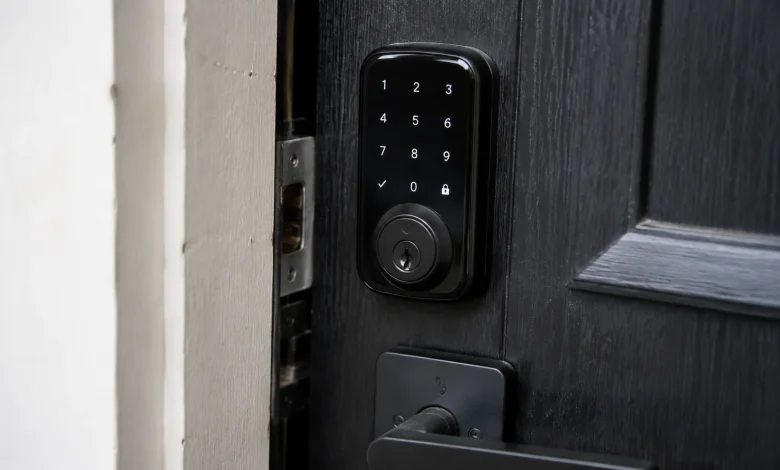
A smart lock is, at its core, an electronic access control system mounted where your deadbolt used to be. It replaces the mechanical key cylinder with authentication methods like PIN codes, Bluetooth, Wi-Fi, Z-Wave, or biometric fingerprint readers. Some integrate directly with Apple HomeKit, Google Home, or Amazon Alexa. Others come with their own proprietary apps. The appeal is real and undeniable you can let in a dog walker while you’re at the office, check whether you locked up from across town, or hand out temporary codes to houseguests without making copies of a physical key.
What a smart lock is not, and this matters more than most product pages will admit, is a replacement for a secure door. The lock is only one component of a door’s overall security. The frame, the hinges, the strike plate, the door itself all of these can be compromised in seconds with the right tool and a determined person. The most sophisticated $400 smart lock in the world provides minimal protection when it’s mounted in a hollow-core door with a cheap strike plate held in by half-inch screws.
The Vulnerabilities Nobody Talks About at the Point of Sale
Cybersecurity researchers have been quietly documenting smart lock vulnerabilities for years, and the findings are not reassuring. In 2016, researchers at Merculite Security tested sixteen Bluetooth-enabled smart locks and found that twelve of them could be opened with no authentication at all the Bluetooth signal could simply be intercepted and replayed. Manufacturers patched some of these flaws, but the testing revealed a deeper problem: the security of these devices depends entirely on how rigorously the manufacturer took software development seriously. And that rigor varies wildly.
Credential stuffing is another underappreciated threat. Many smart locks are tied to cloud accounts. If you reuse a password across services and one of those services gets breached which happens constantly an attacker doesn’t need to pick your lock. They just log into your account and unlock your door remotely. This isn’t a hypothetical scenario. It’s the logical extension of how credential theft actually works in2024, applied to a device that controls physical access to your home.
Then there’s Bluetooth proximity attacks. Some smart locks auto-unlock when they detect your phone nearby. That feature, convenient as it sounds, can be spoofed using Bluetooth relay attacks where two devices amplify and extend a signal, tricking the lock into thinking your phone is at the door when it’s actually in your pocket across the building. Car thieves have been using this exact technique to steal keyless-entry vehicles for years.
What Locksmiths Observe That Doesn’t Make It Into Marketing Copy
Spend time talking to working locksmiths not the ones selling smart locks, but the ones getting called in to deal with lockouts and break-ins and a different picture emerges.
The most common complaint isn’t hacking. It’s battery death. Smart locks run on batteries, typically AA or 9-volt, and when those batteries die at 11pm on a Tuesday after a long day, the elegant technology becomes a barrier between you and your bed. Some locks have external power options for emergency use, but most homeowners don’t know about them until they’re standing in the cold figuring it out. Locksmiths get these calls more than you’d think.
Motor failure is another recurring issue. The mechanical components inside a smart lock are more complex than a traditional deadbolt, and complexity creates more failure points. Cold weather, humidity, and ordinary wear affect these motors over time. A deadbolt that’s lasted thirty years in your grandfather’s house has no motor to fail. A smart lock might need replacement in five.
There’s also a subtler issue that almost never comes up in consumer discussions: firmware updates and product discontinuation. When a company stops supporting a device which happens frequently in the fast-moving consumer tech space security vulnerabilities discovered after that point go unpatched. You might be living with a known security hole and have no way to fix it short of replacing the entire lock. Traditional locks don’t have this problem. A deadbolt doesn’t stop working because the company that made it pivoted to a new product line.
The Case That Smart Locks Actually Strengthen
Fair is fair, though. Smart locks offer genuine security advantages that are easy to dismiss if you’re focused only on their failure modes.
Physical key management is a real and underestimated security problem. Keys get copied, shared carelessly, lost, and forgotten in the possession of ex-partners, former housekeepers, or the contractor who did your kitchen three years ago. A smart lock with rotating PIN codes or time-limited digital credentials solves this problem cleanly. You can revoke access instantly, create codes that expire automatically, and maintain a log of every entry and exit. That audit trail alone has practical value in scenarios ranging from package theft investigations to domestic disputes to employee accountability.
For rental properties and short-term rentals, smart locks are genuinely transformative from a security standpoint. The old model of re-keying between tenants, often skipped for cost reasons, is replaced by a simple code change. Hosts who manage multiple properties remotely can’t reasonably carry physical keys for every unit the smart lock makes secure access delegation practical in a way that simply wasn’t possible before.
And for people with mobility limitations, older adults, or anyone who struggles with physical keys, the accessibility argument is substantive, not just marketing language.
How to Think About Smart Lock Security Like Someone Who Actually Knows Locks
The professionals who think most clearly about physical security tend to evaluate it in layers, not as a single device decision. A smart lock on a reinforced door with a hardened strike plate, quality hinges, and a solid frame is meaningfully more secure than an expensive traditional lock on a standard hollow door with builder-grade hardware. The lock is the last line of defense in a chain, not the whole chain.
If you’re going to use a smart lock, use one that supports local operation meaning it still works when your Wi-Fi is down or the company’s servers are having a bad day. Schlage, Yale, and a few others offer locks that can operate entirely without a cloud connection, which eliminates a significant category of remote attack. Enable two-factor authentication on the account tied to your lock. Don’t use a shared password. Write down or store the emergency PIN somewhere accessible but not obvious, because the day the battery dies is not the day you want to be searching your email for it.
Keep the physical key backup. This sounds like it defeats the purpose, but it doesn’t it’s redundancy, and redundancy is how security professionals think.
The Real Question Underneath the Hype
The honest answer to whether smart locks are safe is the same unsatisfying answer that applies to most technology: it depends on which one, how it’s configured, what it’s attached to, and whether the person using it understands what they actually have.
The lock industry, like every industry touched by consumer electronics, has an incentive to sell you the new thing and an incentive to make the new thing sound better than it is. Most smart locks sold today are reasonably secure against opportunistic physical attacks. They are less secure than they appear against digital threats, and their long-term reliability is genuinely uncertain in ways that traditional hardware is not.
The locksmiths who’ve been in business for twenty years aren’t against smart locks. Most of them use them, recommend them for the right use cases, and install them daily. What they’ll tell you, if you ask the right questions, is that security is a system. Technology is one input into that system. And the front door of your house deserves more than a good-looking app.