How Chanel and Hermès Mastered the Craft of Modern Mythology
The Brand That Refuses to Be Just a Brand
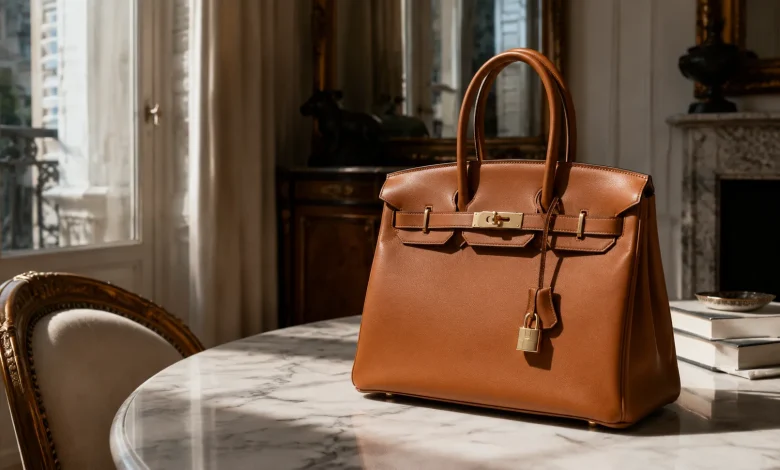
There’s a particular kind of silence that falls over a room when someone sets a Birkin bag on the table. Not because of the price though six figures will quiet most conversations but because of what the object carries with it. History. Restraint. The unspoken suggestion that the person holding it belongs to a world where things are earned slowly, chosen carefully, and kept forever.
That silence is not accidental. It is engineered.
Chanel and Hermès have spent over a century building something that most companies would never dare attempt: a mythology. Not a brand identity, not a visual system, not a content strategy. A mythology complete with founding legends, sacred rituals, forbidden shortcuts, and a cast of characters who feel more like archetypes than historical figures. Understanding how they did it, and why it still works in an era of infinite scroll and five-second attention spans, reveals something profound about human desire and the stories we need in order to want things.
The Founder as Origin Story
Every mythology begins with a creation moment. For Chanel, that moment has been polished into near-religious clarity: Gabrielle Bonheur Chanel, an orphan from Saumur, who taught herself to sew, moved to Paris, and proceeded to dismantle the corseted silhouette that had imprisoned women for generations. The little black dress. The jersey fabric borrowed from menswear. The No. 5 perfume named with a shrug of numerical indifference. The chain-strap bag designed so women wouldn’t have to carry things in their hands anymore.
Every detail of the Coco Chanel story has been curated to read like myth rather than biography. The poverty becomes proof of authenticity. The audacity becomes the founding principle. The personal contradictions her wartime associations, her complicated politics are either quietly submerged or framed as the acceptable flaws of someone too singular to be judged by ordinary standards.
Hermès is a different kind of origin story, but equally deliberate. Thierry Hermès was a harness-maker in Paris in1837, crafting saddles and bridles for European nobility. The brand has never let anyone forget this. The horse-drawn carriage in the logo is not nostalgia. It is a thesis statement: we come from craft, from function, from a time when the people who made things understood what those things were actually for. When Hermès eventually pivoted from equestrian goods to handbags and silk scarves, it carried that DNA forward with almost aggressive literalness. The silk scarf designs still frequently feature horses, carriages, and bridle motifs. The Birkin and Kelly bags are named after women of a certain legendary status Jane Birkin, the effortless Anglo-French muse; Grace Kelly, the princess who shielded her pregnancy from paparazzi with an Hermès bag and accidentally created one of the most coveted objects in fashion history.
Scarcity as Theology
Most luxury brands talk about scarcity. Chanel and Hermès practice something closer to a belief system around it.
Hermès has famously and controversially made the Birkin impossible to simply purchase. You cannot walk into an Hermès store and buy one. You build a relationship with a sales associate. You make purchases over time. You demonstrate loyalty. You wait. The average waiting period before being offered a Birkin can stretch across years, and the entire process has a ritualistic quality that transforms the acquisition from transaction into rite of passage. Critics have called this manipulative. Admirers call it meaningful. Both are right. The point is that by refusing to make the process easy, Hermès ensures the object arrives pre-loaded with narrative. You don’t just own a Birkin. You survived the process of getting one.
Chanel approaches scarcity differently but with equal precision. The price of the Classic Flap bag has increased roughly 70percent since 2020, a series of hikes so steep and deliberate that they created their own news cycle. The brand’s logic, never quite stated but widely understood, is that the bag should always be aspirational even to those who can technically afford it. There is a version of expensive that feels accessible, and then there is the kind of expensive that maintains a permanent psychological altitude. Chanel has chosen the latter, and it has gambled correctly, so far that the increase in perceived value will outpace any damage done by alienating the merely wealthy in favor of the truly committed.
The Artisan as High Priest
Both houses have understood something that most corporations fundamentally resist: reverence requires witnesses.
Hermès has built an entire public ritual around its artisans. The brand’s saddle-stitching technique using two needles and a waxed linen thread, by hand, by a single craftsperson who finishes one bag from start to finish rather than passing it down an assembly line is not just a manufacturing method. It is a story, retold in every profile, every documentary, every behind-the-scenes feature the brand carefully permits. The artisan is not a factory worker. The artisan is a keeper of knowledge. And in that framing, the buyer is not purchasing an object but inheriting a piece of someone’s lifetime skill.
Chanel plays this game through the Métiers d’Art its network of specializedateliers that the house acquired starting in the 1980s to protect disappearing crafts. Feather-workers. Goldsmiths. Glovemakers. Embroiderers. Theseateliers, housed under a holding company called Paraffection, were at serious risk of extinction when Chanel began buying and sustaining them. Every year, the Métiers d’Art collection is devoted entirely to showcasing their work. It is fashion as cultural preservation theater and it works because it is also genuinely true. The mythology and the reality overlap, which is the only condition under which mythology sustains itself over time.
Why Mythology Beats Marketing
Marketing tells you what to buy. Mythology gives you a reason to believe.
The distinction matters because modern consumers, especially at the level Chanel and Hermès operate, are sophisticated enough to see through most advertising. They know they are being sold something. What they are less equipped to resist is a coherent world with its own rules, its own history, its own sense of who belongs and who is still on the outside looking in. Every luxury brand wants this. Almost none of them have it.
The ones that fall short tend to make the same mistake: they confuse the symbols of mythology with the substance. They create a founding story without making it structurally true. They perform scarcity without earning it. They hire celebrities instead of developing characters. The result is the uncanny valley of luxury expensive things that feel hollow because the narrative infrastructure isn’t actually there.
Chanel and Hermès have mythology that holds because it is layered deep enough that it survives contact with reality. The products are, genuinely, beautifully made. The histories are, genuinely, remarkable. The scarcity is, genuinely, enforced rather than simulated. There is a bedrock of truth beneath the performance, and that is what separates a legend from a lie.
The Question That Follows Every Great Myth
Can it last? That is the thing about mythology it is extraordinarily durable right up until the moment it isn’t. The stories that survive are the ones tended carefully by people who understand that belief is not passive. It requires maintenance. It requires consistency. It requires the occasional sacrifice of short-term revenue in service of long-term meaning.
Hermès has shown a remarkable willingness to make that sacrifice. The brand grows slowly, opens stores carefully, and has never licensed its name in the way that hollowed out so many of its competitors in the 1980s and 90s. Chanel went private generations ago and has stayed that way, insulated from quarterly earnings pressure and the particular kind of desperation it produces.
They are not immune to disruption. The resale market, the rise of younger consumers who question inherited hierarchies, the growing discomfort with conspicuous consumption in an era of visible inequality all of these are forces pressing against the mythology from the outside.
But so far, the mythology holds. The Birkin still silences rooms. The interlocked C still carries a century’s worth of compressed meaning. And somewhere in Paris, a craftsperson is stitching a bag by hand the same way it was done forty years ago, because the story requires it and because the story, remarkably, is still true.