The Dark Side of Smart Watches: What Your Wearable Says About You
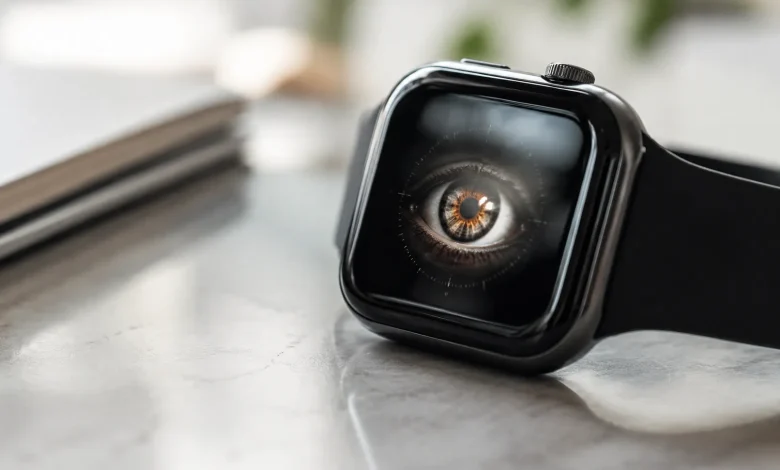
There’s something almost poetic about the way we’ve invited surveillance into our lives and called it wellness. The smartwatch sits on your wrist like a concerned friend counting your steps, reminding you to breathe, alerting you when your heart rate spikes. It knows when you slept badly. It knows when you didn’t move enough. And somewhere, in a data center you’ll never visit, it remembers all of it.
We didn’t arrive here by accident. The pitch was irresistible: take control of your health, stay connected, live better. And for millions of people, the devices genuinely deliver on that promise. A woman in Ohio catches an irregular heartbeat because her Apple Watch flagged an anomaly at 2a.m. A marathon runner optimizes his recovery based on HRV trends. The technology works. That’s never really been the question.
The question is what we trade for it.
Your Body as a Data Product
When you strap on a smartwatch, you’re not just wearing a device. You’re enrolling in a continuous biometric study where you are both the subject and the subscriber fee. Every step, every sleep cycle, every stress-induced spike in your pulse it all flows upstream. Apple, Google, Garmin, Fitbit: each company has its own data architecture, its own privacy policy written in the kind of language designed to be agreed to rather than read.
The uncomfortable truth is that health data is among the most valuable categories of personal information in existence. It can reveal things about you that you don’t know yourself. Patterns in your heart rate variability can hint at anxiety disorders. Sleep fragmentation correlates with dozens of chronic conditions. Gait data can indicate early neurological changes years before clinical symptoms appear. This isn’t speculative researchers have demonstrated these correlations in peer-reviewed literature. Your wrist data is, in a very real sense, a preview of your medical future.
Insurance companies have noticed. In 2018, John Hancock became the first major U.S. insurer to tie premium pricing to fitness tracker data, offering discounts to customers who shared their wearable metrics. The framing was positive rewards for healthy behavior. But the logic cuts both ways. If good numbers earn discounts, it follows that bad numbers eventually earn penalties. The architecture is already in place. The only thing missing is regulatory permission to use it fully.
The Quantified Self, Hollowed Out
There’s a particular kind of person who becomes genuinely distressed when they forget to wear their watch on a run. Not because they ran less hard, but because the run wasn’t recorded. Untracked miles feel, to some people, like miles that didn’t happen. This is a strange psychological development the substitution of data for experience.
The quantified-self movement started with genuine intellectual curiosity. A community of early adopters began measuring sleep, mood, diet, and focus with the goal of understanding themselves more precisely. The idea had real merit. Self-knowledge is worth pursuing. But somewhere between the early forum discussions and the mass-market smartwatch era, the project quietly inverted itself. Instead of using data to understand experience, many people began using experience to generate data. The run became instrumental. The sleep became a metric to optimize. The body became a system to manage.
Behavioral psychologists call this “measurement reactivity” the tendency for behavior to change simply because it’s being observed. When your watch congratulates you for closing your activity ring, it triggers a dopamine response. When you fall short, there’s a low-grade cognitiveitch. Over time, your intrinsic relationship with your own body gets replaced by a feedback loop mediated by a consumer device. You stop asking how you feel. You check the score.
What the Data Reveals That You Never Consented To
In2021, researchers at the University of Washington demonstrated that smartwatch accelerometer data could be used to infer keyboard inputs with meaningful accuracy meaning that under certain conditions, your typing could be partially reconstructed from wrist movement alone. This wasn’t a bug. It was a physics problem. The sensors required for fitness tracking are sensitive enough to capture far more than fitness.
Location data compounds the picture. Many wearables pair with smartphones to build granular movement histories. The route you run each morning. The Thursday afternoon you spent not at the office. The 3 a.m. walks that suggest something about your sleep habits or your life circumstances that no app ever directly asked about. Individually, these data points seem innocuous. Aggregated over months and years, they constitute a behavioral portrait more detailed than anything you’d share voluntarily.
The 2023 settlement involving Flo Health a period-tracking app that shared sensitive user data with Facebook and Google despite explicit privacy promises was a warning that came too late for the millions of users already enrolled. Health and wellness apps, including those connected to wearables, have a documented history of sharing data with third parties in ways that users neither anticipated nor understood. The Federal Trade Commission has taken enforcement action, but the pace of that action lags considerably behind the pace of data collection.
The Class Dimension Nobody Talks About
Premium smartwatches start around $250and scale past $800for the medical-grade features ECG capability, blood oxygen monitoring, fall detection. The populations most in need of continuous health monitoring are often the least equipped to afford it. Meanwhile, the data generated by those who can afford it flows into systems that make inferences about entire demographic groups.
There’s also a subtler dynamic at play in workplace wellness programs. Dozens of major employers have introduced opt-in fitness challenges where employees earn points or prizes for hitting daily step goals tracked through a company-provided wearable. The opt-in framing creates a veneer of voluntariness. But when participation rates are visible to management, when the program is championed by leadership, when non-participants are implicitly coded as less engaged the choice to opt out carries social costs that the program designers don’t advertise.
This is the softcoercion that rarely makes headlines. Not a mandate. Just an environment where saying no has become quietly expensive.
Living With the Tension
None of this leads to a clean conclusion, and anyone who tells you to simply throw your watch in a drawer is selling something simpler than the actual situation. For people managing chronic conditions, for athletes who rely on recovery metrics, for older adults whose families sleep better knowing fall detection is active the devices provide real value that isn’t easily dismissed.
The more honest position is to hold both things at once. Wearables are useful and they are extractive. They extend your self-knowledge and they monetize it. They can catch a dangerous arrhythmia and they can help an insurer build a risk profile. The technology doesn’t choose how it’s used. People, companies, and regulators do and right now, that governance has not kept pace with the hardware strapped to 230 million wrists worldwide.
What your wearable says about you is, in the end, less interesting than what the systems receiving your data plan to do with what they learn. That’s the conversation the wellness branding was never designed to start.