How My Thermostat Saved Me $120 on This Month’s Energy Bill
How My Thermostat Saved Me $120 on This Month’s Energy Bill
The Month Everything Changed
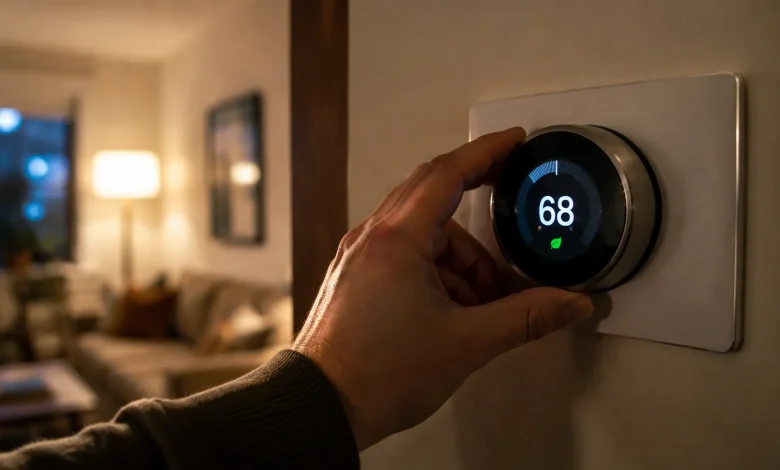
I’ll be honest with you I almost didn’t check the energy bill. It had been sitting in my inbox for two days, and I’d developed a habit of avoiding it the way you avoid stepping on a scale after the holidays. But when I finally opened it, something was different. The number staring back at me was $120 lower than the same month last year. Same house. Same appliances. Same general routine. The only thing I’d changed was a small device mounted on my hallway wall.
That was the moment I realized I’d been casually hemorrhaging money for years, and a thermostat a device most people treat as background furniture had quietly fixed it.
Why Most People Ignore Their Thermostat
There’s a particular kind of household appliance that gets taken for granted precisely because it works. The thermostat is the ultimate example. You set it once, maybe twice a year when the seasons change, and then it disappears into the wall. You stop seeing it. It becomes part of the architecture.
What most people don’t realize is that heating and cooling account for somewhere between 40 and 50 percent of the average American household’s energy costs. Not lighting. Not the refrigerator running all night. Not the television you leave on while you’re half-asleep. Climate control is the dominant line item, and the thermostat is the dial that controls it.
I’d been running mine on a fixed72degrees. All day. Every day. Whether I was home, at the office, asleep, or out running errands on a Saturday afternoon. I was essentially air-conditioning an empty house for roughly 10 hours a day, five days a week, and paying for it without a second thought.
Switching to a Smart Thermostat: What That Actually Means
When people hear “smart thermostat,” they often picture something expensive, complicated, or both. I did. I’d looked at the Nest and the Ecobee a few times and then closed the tab. The upfront cost felt unnecessary when the old thermostat technically worked fine.
Eventually I pulled the trigger on an Ecobee not because of aggressive marketing but because acoworker mentioned offhand that she’d paid for it within three months. That kind of concrete, personal testimony carries more weight than any product page.
Installation took about25 minutes. The app setup took another 10. What happened after that was less dramatic than I expected, which is actually the point. Nothing felt disruptive. The house still felt comfortable. I just started paying less.
Here’s the shift that matters: a smart thermostat doesn’t cool or heat your home better. It does it less intelligently. The device learned within about a week that I leave for work around 8:15 and usually return somewhere between 5:30 and 6. It figured out that I run warmer when I sleep and that the bedroom where I spend most of my evening hours needs to stay comfortable earlier than the living room does on weeknights. I didn’t program any of this manually. It observed, adjusted, and optimized.
The Math Behind That $120
I want to be precise here because vague claims about “savings” are everywhere and they usually mean very little.
My previous bill for the same calendar month last year was $218. This month: $98. That’s $120 saved not projected, not estimated from an EPA chart, but actual dollars off an actual bill.
Breaking it down, most of the savings came from three behavioral shifts the thermostat enforced automatically. First, the house was cooling down to80 degrees during work hours instead of maintaining 72. The difference between maintaining a space at 72 and letting it drift to 80 in a sealed, insulated home is enormous in terms of compressor runtime. Second, the thermostat started pre-cooling the house about 45 minutes before I typically arrived home, which sounds counterintuitive until you understand that it’s cheaper to cool a house during off-peak hours than to blast the AC at6 p.m. when demand is highest. Third and this one surprised me it detected when I’d fallen asleep based on phone proximity and adjusted the temperature up by two degrees automatically. I never noticed, and I never woke up uncomfortable.
Those three changes, running quietly in the background, added up to nearly half my monthly energy cost.
The Broader Problem This Exposes
The $120 is satisfying. But what I keep thinking about is the years before it.
If I was spending roughly $120 more per month than necessary, that’s $1,440 per year. Over a decade, that’s $14,400 in today’s dollars, roughly the cost of a used car, a significant home repair, or several years of a child’s college savings contributions. Not because of extravagance. Not because of any conscious decision. Simply because I set the thermostat once and forgot to think about it again.
This is the insidious nature of fixed costs that feel small on a monthly basis. No single bill felt outrageous. $200 for electricity is unpleasant but not alarming. It never triggered the kind of scrutiny that a $500 bill would have. The inefficiency was priced just below the threshold of concern, which meant it persisted for years without challenge.
Smart home technology gets a lot of criticism some of it deserved for being gadgetry in search of a problem. But the thermostat case is genuinely different. The problem it solves is real, measurable, and persistent. It doesn’t automate something trivial. It optimizes the single largest controllable expense in most households, and it does it without requiring anything from you after the first week.
What I’d Tell Anyone Still on the Fence
The Ecobee I installed cost $189. I recovered that in less than two months. The math on that is straightforward enough that it barely needs elaboration.
What I’d push back on is the framing that this is a “tech upgrade” or a quality-of-life improvement. It’s neither, really. It’s closer to plugging a slow leak. The money was always leaving it was just leaving quietly, in increments small enough to ignore.
If you’ve been in the same house for more than a year and you’ve never looked at your thermostat schedule not just the current temperature, but the actual programmed logic behind when it runs and when it doesn’t there’s a reasonable chance you’re in the same situation I was. Comfortable. Unaware. And paying for it every single month.
The thermostat on my wall still looks like background furniture. The difference is that now, it’s working for me instead of just sitting there while money drains quietly into the summer air.