Selling the Dream: How Luxury Brands Monetize Our Deepest Aspirations
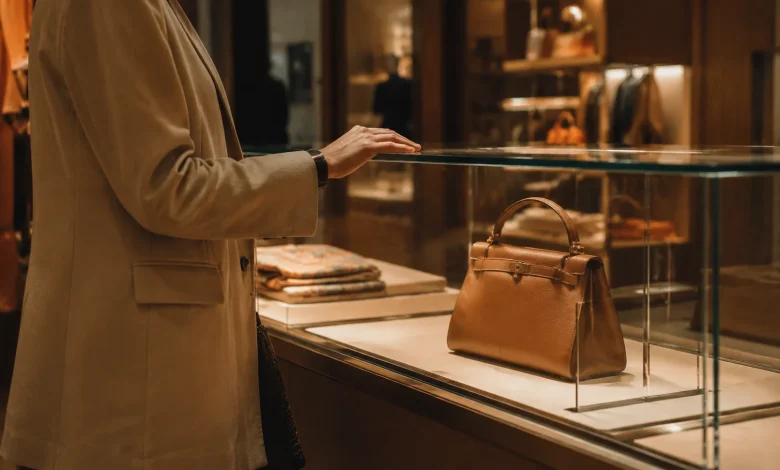
There’s a particular kind of silence inside a Hermès boutique. The lighting is warm but deliberate. The sales associates don’t hover they wait, which somehow feels more powerful. The bags sit behind glass not because they’d be stolen otherwise, but because the barrier itself is part of the message. You are on one side. The object of desire is on the other. The distance is the product.
This is what luxury brands have understood for generations, long before behavioral economists gave it a name: they are not selling things. They are selling the feeling of having crossed a threshold.
The Architecture of Aspiration
Every luxury purchase begins years before the transaction. It begins the first time a child sees a certain logo on a parent’s wrist, or catches a magazine spread featuring a handbag that costs more than a month’s rent. The brand is planting something not a desire for the object exactly, but a desire for the version of yourself who owns it. That version is calmer, more respected, more arrived. The brand is the shorthand for that fiction.
What’s remarkable is how systematically this is engineered. LVMH, the conglomerate behind Louis Vuitton, Dior, and roughly seventy other brands, spent over $10 billion on marketing in a single recent year. That number dwarfs the R&D budgets of most consumer goods companies. Because the actual product the leather, the stitching, the watch movement matters far less than the story wrapped around it. A $40 candle and a $400Diptyque candle burn the same way. What you’re paying for in the second case is the narrative permission to believe you’re the kind of person who buys $400 candles.
Scarcity as a Design Choice
The most insidious and brilliant tool in the luxury playbook is manufactured scarcity. Hermès does not simply make fewer Birkin bags because production is limited. It makes fewer Birkin bags because abundance would kill the dream. When something is available to everyone, it stops doing the identity work that luxury consumers are actually paying for.
The waiting list is not a logistical inconvenience. It is the product. The two-year wait, the relationship-building required with a sales associate, the subtle vetting process all of it transforms a handbag into an achievement. By the time someone acquires a Birkin, they haven’t just bought a bag. They’ve earned a story. They have proof, in the most tangible form possible, that they are someone for whom even difficult things eventually yield.
Rolex uses a similar mechanism with its steel sports models. The Daytona and the Submariner are not rare in any absolute sense the company produces hundreds of thousands of watches annually. But by controlling allocation through authorized dealers and allowing secondary market prices to balloon to two or three times retail, Rolex turns the act of buying at retail price into a status signal in itself. Finding one is the flex, not just wearing one.
The Psychology Behind the Price Tag
There’s a counterintuitive principle at work in luxury pricing that economists call the Veblen effect, named after Thorstein Veblen, who wrote about conspicuous consumption in1899 with a clarity that reads as almost prophetic today. Unlike ordinary goods, where demand falls as price rises, luxury goods can see demand increase with price. Making something more expensive makes it more desirable, because the expense is the point.
This isn’t irrational, exactly. It’s just rational about different things. When you buy a luxury item, you’re not optimizing for utility per dollar. You’re investing in social capital, in self-narrative, in belonging to a tribe that requires significant entry costs to join. The high price is not a bug. It’s the filtering mechanism that makes membership meaningful.
Brands understand this and play it deliberately. When Bottega Veneta quietly removed its name from its products in the lateaughts no logo, no monogram it wasn’t humility. It was the ultimate status move. Now only people who already knew, knew. The in-group shrank, and its exclusivity intensified. “If you know, you know” is the most powerful sentence in luxury marketing, and it costs nothing to say.
Aspirational Tiers and the Art of the Accessible Entry Point
Not everyone can afford a $12,000 handbag. Luxury brands know this and have structured themselves accordingly, creating what industry insiders call the aspirational tier products priced high enough to feel luxurious but accessible enough to capture a much wider market.
A Gucci belt. A Burberry wallet. A Tiffany key pendant. These items exist at price points that require sacrifice for most buyers, which makes the sacrifice feel meaningful. You saved for it. You chose it over other things. That deliberateness becomes part of the ownership experience, woven into the way you reach for the wallet or fasten the belt. The object absorbs the decision.
This is extraordinarily smart business. A twenty-year-old buying their first Gucci piece isn’t just a customer they’re an investment. The brand is buying future loyalty with that first transaction. If the item delivers the feeling it promised, that customer is far more likely to buy the $1,200 shoes when they can afford them, and then the $3,000 bag after that. The entry product is essentially a recruitment tool.
When the Dream Leaks
The system has fault lines, and they’re worth examining honestly. Luxury brands are exquisitely sensitive to overexposure. When a brand becomes too accessible through aggressive diffusion lines, discount outlets, or oversaturation in certain markets it undergoes a kind of cultural devaluation that no marketing budget can easily reverse.
Coach spent years in the early 2010s fighting exactly this problem. The brand had expanded aggressively into outlet malls, discounting heavily and flooding the market with accessible product. Sales went up. Prestige went down, fast. Rebuilding required pulling back from outlets, raising prices, replacing creative direction, and essentially restarting the dream from a less compromised position. The recovery took the better part of a decade.
The lesson the broader industry absorbed from Coach and from similar stumbles by Burberry and Prada during different periods is that exclusivity is not a bonus feature of luxury. It is the structural foundation. Compromise it and the entire architecture becomes unstable, no matter how beautiful the product.
Sustainability, Ethics, and the Dream’s Next Test
A newer tension is reshaping the landscape. A growing cohort of consumers, particularly younger ones, are interrogating what the dream is actually made of. If a handbag is aspirational but the supply chain involves exploitative labor or environmentally destructive materials, does the aspiration survive the scrutiny?
Brands are adapting, some more genuinely than others. Stella McCartney built an entire brand identity around ethical production. Kering, the group behind Gucci and Saint Laurent, publishes an Environmental Profit and Loss account that attempts to measure ecological impact in financial terms. Whether this represents genuine transformation or sophisticated greenwashing depends entirely on whom you ask.
What’s clear is that the dream is no longer allowed to be only about arrival. For a significant portion of the luxury market, the dream now includes the belief that you got there responsibly that the thing on your wrist or shoulder doesn’t come at someone else’s cost. Brands that can sell that story convincingly, while maintaining all the other architecture of desire, will be the ones that thrive in the next chapter.
The sell, in other words, is getting more complex. But the fundamental transaction remains unchanged. You’re still crossing a threshold. You’re still buying a version of yourself. The only difference is that version now cares about where the leather came from.