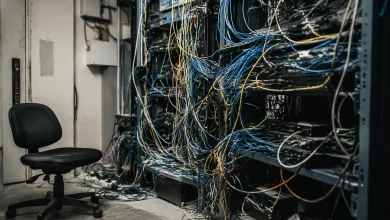
Predictions: The Future of Connected Workspaces and Data Synergy

There’s a quiet revolution happening inside the modern office and most people are too busy switching between tabs to notice it. The tools we use to work have multiplied faster than our ability to manage them. The average knowledge worker today toggles between a dozen or more applications before lunch. Each one holds a sliver of context, a fragment of truth, a piece of the organizational puzzle. The promise of the connected workspace is that one day, those fragments will finally talk to each other not just pass data back and forth, but actually synthesize meaning in real time.
We’re not there yet. But the trajectory is unmistakable.
The Fragmentation Problem Is Getting Harder to Ignore
For years, enterprise software vendors sold tools on the premise of doing one thing exceptionally well. Project management here. Customer data there. Communication in another silo entirely. This specialization made sense when workforces were smaller and processes were slower. But as organizations scaled and workflows became more interdependent, the cracks started showing.
A sales team closes a deal. That information lives in the CRM. The finance team needs it to forecast revenue, but their system doesn’t sync. The product team wants to flag a key request the client made, so someone types it manually into a project tracker. The client success manager finds out about the account three weeks later from an email chain. By that point, momentum has already stalled.
This isn’t a story about inefficiency. It’s a story about lost intelligence. Every handoff where data gets re-entered, re-summarized, or simply dropped represents a gap between what an organization knows and what it acts on. The connected workspace movement is, at its core, a serious attempt to close that gap.
What “Connected” Actually Means in Practice
The word gets thrown around loosely, but genuine connectivity in a workspace context goes well beyond integrations and API handshakes. A truly connected workspace doesn’t just move data it preserves context. It knows that the contract signed on Tuesday is related to the support ticket opened on Thursday. It understands that a shift in project timeline affects budget allocations downstream. It connects decisions to their consequences across time.
Companies like Notion, Coda, and Microsoft with its Viva suite have been building toward this vision, each with different architectural philosophies. Some lean toward the document as the unit of knowledge. Others place the database at the center. What’s interesting is that these differences are starting to matter less as AI layers get draped across all of them, abstracting away the underlying structure and surfacing what users actually need.
The near-term future belongs to interfaces that feel less like software and more like a knowledgeable colleague who has read everything, remembered everything, and can surface the right thing at the right moment.
The Role of AI Is Bigger and Stranger Than Most Predictions Allow
Most forecasts about AI in the workplace focus on productivity: tasks completed faster, meetings summarized automatically, emails drafted in seconds. These gains are real and they’re compounding. But they miss the more fundamental shift that’s coming.
AI doesn’t just accelerate work. It changes the shape of work. When a system can synthesize information across an entire organization’s knowledge base and generate coherent, contextually aware responses, the nature of decision-making changes. Middle management roles built around information routing the people whose job it was to know who needed to know what become structurally redundant. Not because machines replace humans, but because the flow of information no longer requires human intermediaries to function.
This creates genuine disruption and genuine opportunity, sometimes for the same person in the same week. Teams that learn to treat AI not as a search engine but as a reasoning partner will find themselves operating at a level of clarity and speed that feels almost unfair relative to competitors still wrestling with disconnected toolchains.
Data Synergy Isn’t a Feature. It’s a Posture.
Here’s where a lot of organizations stumble. They invest in integration tools, they implement platforms with impressive sync capabilities, and then they discover that the real barrier was never technical. It was cultural.
Data synergy the state in which information flows naturally, enriches decision-making, and is trusted by the people who use it requires organizations to make a bet that transparency is more valuable than territorial control. Departments that hoard data aren’t being irrational. In many environments, information is leverage. Sharing it means surrendering a form of power. No software platform resolves that tension. Leadership has to.
The organizations getting this right tend to share a few traits. They treat their internal knowledge infrastructure with the same seriousness they apply to their product. They have explicit ownership models for data not just who can access it, but who is responsible for keeping it accurate and current. And they recognize that a connected workspace is only as valuable as the quality of what’s flowing through it. Clean, well-structured, consistently maintained data is the substrate everything else runs on.
The Workspace as a Living System
One of the more provocative ways to think about where all this is heading is to stop thinking about the workspace as a collection of tools and start thinking about it as a living system one with its own metabolism, its own memory, and its own capacity to learn.
This framing is less metaphorical than it sounds. Systems that continuously ingest organizational activity, identify patterns, and surface anomalies are already in commercial deployment. Platforms like Glean and Guru are indexing internal knowledge in ways that make institutional memory retrievable rather than perishable. When an employee leaves, they used to take their context with them. Increasingly, that context can be captured, preserved, and made accessible to whoever steps into the role next.
The long-term implication is significant. Organizations will accumulate compound knowledge advantages over time not just because their people are smart, but because their systems retain and connect the intelligence those people generate. Late movers who underinvest in this infrastructure now will face a widening gap that becomes progressively harder to close.
Trust, Privacy, and the Limits of Openness
None of this comes without tension. The same connectivity that makes organizations sharper also creates new vectors for privacy risk, data misuse, and surveillance creep. Employees who know their communications are being indexed and analyzed even by a well-intentioned AI summarization tool behave differently. That behavioral change can quietly undermine the psychological safety that makes honest, productive collaboration possible.
The most thoughtful implementations of connected workspaces are grappling with this directly. They’re building in explicit boundaries: what gets indexed, what doesn’t, who can query what, and how long information is retained. These aren’t just compliance considerations. They’re design decisions that determine whether people actually use the system authentically or learn to route around it.
The future of connected workspaces will be shaped as much by how organizations handle these tensions as by the technology itself. Platforms that earn trust by being transparent about what they do with data will build the kind of engagement that makes the whole system more valuable. Those that prioritize capability over trust will find adoption patterns that look good in demos but hollow out in practice.
Where This All Lands
The connected workspace isn’t a destination it’s an ongoing negotiation between what technology makes possible and what humans are actually willing to do. The tools are maturing quickly. The harder work is building the organizational conditions that let those tools function as intended.
Over the next several years, the clearest signal of a high-performing organization won’t be the size of its headcount or the sophistication of its product. It will be the quality of its information flow how quickly insight travels from the edges of the organization to the people who can act on it, and how reliably decisions get made on the basis of shared, accurate, current data.
That’s the competitive terrain being staked out right now, largely beneath the surface of more visible conversations about AI and automation. The workspaces that become genuinely connected not just technically integrated, but intellectually coherent will operate at a different level entirely. And the distance between them and everyone else will only grow.