Managing Multi-Tenant Network Access in Complex Corporate Environments
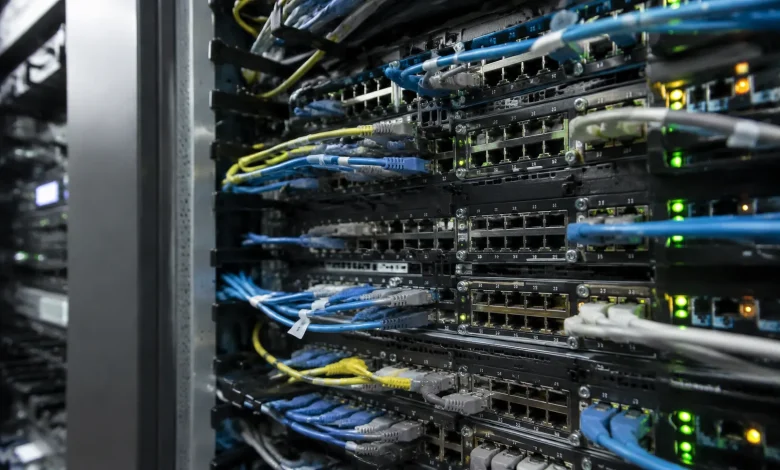
When the Network Becomes a Shared Battlefield
There’s a particular kind of pressure that IT architects feel when they’re asked to connect everything vendors, subsidiaries, contractors, cloud tenants while simultaneously keeping everything separate. It’s not a contradiction they invented. It’s the defining tension of modern enterprise networking, and it gets sharper every year as organizations grow more interconnected and threat surfaces expand accordingly.
Multi-tenant network access isn’t a niche problem anymore. It’s the operational reality for any large corporation managing regional offices under one umbrella, any enterprise relying on a rotating cast of third-party service providers, or any company running parallel business units that share infrastructure but cannot, for regulatory or competitive reasons, share data. The word “tenant” here borrows from cloud architecture, but the concept applies just as meaningfully on-premise: distinct user populations that coexist on the same physical or logical network while requiring different levels of visibility, access, and trust.
Getting this wrong doesn’t just cause technical headaches. It creates audit failures, breach exposure, and sometimes, spectacular business fallout.
The Layers of Complexity Most Guides Skip Over
A standard network segmentation discussion usually centers on VLANs, firewall zones, and maybe some SD-WAN flavor. That’s fine for introductory content. But in genuinely complex corporate environments the kind where legal entities, regulatory jurisdictions, and contractual obligations all intersect on the same campus backbone the challenge is an order of magnitude more textured.
Consider a manufacturing conglomerate that operates plants across four countries, each plant running operational technology (OT) networks alongside corporate IT, with equipment vendors requiring remote access for maintenance windows. You now have: corporate users, OT systems with their own protocols and patch cycles, third-party vendor tunnels, regional compliance requirements under GDPR, local data residency laws, and possibly a joint venture partner who needs read access to specific production metrics. Each of these populations has a distinct trust profile. None of them should see each other’s traffic by default.
The instinct is to solve this with more segmentation. More VLANs. More firewall rules. More ACLs. That instinct isn’t wrong, but it’s incomplete. Pure segmentation without governance becomes technical debt at scale. You end up with rule sets no one fully understands, firewall configurations that contradict each other, and a topology so fragmented that legitimate cross-tenant workflows grind to a halt. Security and usability start cannibalizing each other.
Identity as the Foundation, Not the Afterthought
One of the more durable shifts in enterprise networking over the past decade is the gradual movement toward identity-centric access models. The old perimeter model asked: what network segment are you coming from? The better question is: who are you, what do you need, and can that claim be verified continuously?
This matters enormously in multi-tenant environments because physical location tells you almost nothing useful. A contractor sitting in your corporate office and connecting via your guest VLAN should not inherit more trust than that same contractor accessing a specific application through a properly authenticated session from outside. The VLAN they’re on is an operational convenience. It’s not a trust signal.
Zero Trust Architecture overused as a term, genuinely important as a philosophy starts to earn its keep in these environments. Not because it’s a product you can buy, but because it forces a discipline: every access request is evaluated on its own merits. Tenant identity, device posture, user role, time of access, sensitivity of the destination resource. A vendor maintenance account connecting to an OT system at 2 a.m. during an unscheduled window should trigger scrutiny regardless of which tunnel they came in through.
Implementing this in practice means integrating identity providers across tenant boundaries. That’s harder than it sounds. Each business unit, each external partner, may run a different IdP. Federated identity through SAML or OIDC helps bridge these gaps, but it requires governance agreements upfront who manages attribute mapping, who owns the authoritative source of truth for role assignments, what happens when a contractor’s status changes and their home organization is slow to update the directory.
The Third-Party Access Problem Nobody Talks About Honestly
Third-party and vendor access deserves its own reckoning because it’s where multi-tenant complexity becomes a liability most visibly. The 2020 SolarWinds compromise was, among other things, a brutal demonstration of what happens when trusted vendor access becomes an unmonitored lateral movement path. That incident didn’t require the attacker to break through a firewall in the traditional sense. It required exploiting the trust relationship a vendor connection already had.
Corporate environments routinely maintain dozens, sometimes hundreds, of third-party access channels. Some are well-documented. Many are not. A vendor gets VPN credentials for a deployment engagement four years ago, the engagement ends, the credentials don’t get revoked because three different teams assumed someone else handled it. That’s not a hypothetical. It’s standard entropy.
Managing this requires treating vendor access as a first-class operational problem, not an exception to the normal access management process. Privileged Access Management (PAM) platforms have matured considerably in this space they can broker vendor sessions, record activity, enforce just-in-time access that expires after a defined window, and ensure no long-lived credentials persist in vendor hands. Pairing PAM with a formal vendor access lifecycle onboarding, periodic review, offboarding triggers tied to contract status closes the entropy loop that most organizations leave open.
Network Access Control (NAC) adds another layer by enforcing posture checks before any endpoint gains connectivity. A vendor’s laptop that’s out of compliance with endpoint protection standards shouldn’t get the same VLAN assignment as a managed corporate device, regardless of what credentials it presents. These controls work together; neither is sufficient alone.
Routing Policy and the Art of Selective Visibility
At the routing layer, multi-tenant environments demand careful thought about what each tenant can see, not just what they can reach. VRF (Virtual Routing and Forwarding) instances on enterprise routers create separate routing tables for distinct tenants, ensuring that traffic from one tenant population is invisible to another at the routing level rather than just blocked at a firewall. This is a meaningful architectural difference. A firewall block is a gate. A separate routing table means the road doesn’t exist at all from one tenant’s perspective.
SD-WAN platforms have made VRF-like segmentation more accessible and operationally manageable across distributed sites, which matters when you’re dealing with branch offices or plant locations that don’t have dedicated network engineers on site. Policy can be defined centrally and pushed consistently, which reduces the configuration drift that turns segmented environments into porous ones over time.
DNS segmentation is an underappreciated piece of this puzzle. Controlling which tenants can resolve which internal hostnames limits reconnaissance opportunities even when a device somehow lands on a network segment it shouldn’t have access to. It won’t stop a determined attacker, but it raises the cost of lateral movement in ways that complement firewalling and routing controls.
Observability Without Violating Tenant Boundaries
One genuinely difficult design challenge in multi-tenant network environments is building security visibility that serves the organization’s monitoring needs without inadvertently creating cross-tenant data exposure. A centralized SIEM ingesting all tenant traffic logs needs to be designed so that security analysts from one business unit cannot query logs belonging to another, even if both are nominally internal entities.
Role-based access to log data, tenant-scoped dashboards, and careful data classification in the logging pipeline are all necessary. This is the operational equivalent of ensuring that the security camera footage from one tenant space isn’t casually viewable by staff from an adjacent tenant a reasonable expectation in a co-located facility, and an equally reasonable expectation when the “facility” is a shared network infrastructure.
Network detection and response (NDR) tools that support tenant-aware analysis have matured enough that this is no longer purely a custom engineering problem. But it does require that the business define tenant boundaries clearly before the tooling is deployed, because retrofitting data isolation into a monitoring infrastructure that was built without it is a painful exercise.
Governance Is the Glue That Holds It Together
Technical architecture handles the mechanism. Governance handles the meaning. A beautifully segmented network with no clear ownership model, no change management process, and no periodic access reviews will drift toward disorder within eighteen months. The VLANs will still exist. The rules will still be there. But they’ll gradually stop reflecting operational reality as teams come and go, acquisitions happen, and vendors expand their access scope informally.
The organizations that manage multi-tenant access well tend to share a few habits: they maintain a living inventory of tenant populations and their associated access grants; they treat access reviews as non-negotiable recurring events rather than one-time audits; and they build network change requests around explicit business justification rather than allowing engineering teams to make access decisions unilaterally.
None of this is glamorous. It doesn’t make for exciting conference presentations. But it’s what separates environments where multi-tenant access is a controlled and auditable function from environments where the network topology is a historical accident that nobody fully understands anymore.