Irrational Desires: The Brain Science Behind Luxury Shopping
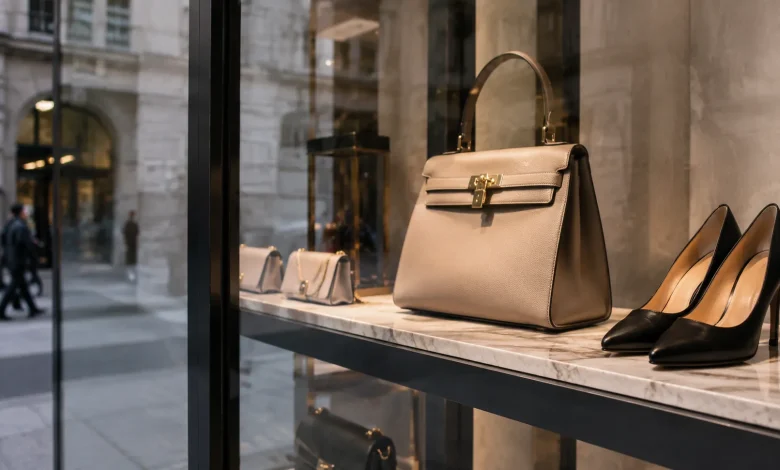
There’s a moment that most people recognize but rarely admit to. You’re standing in a store or more likely, scrolling at midnight and something catches your eye. It’s absurdly overpriced. You know it. You do the mental math, you know exactly what else that money could do, and you buy it anyway. Not despite the price. Sometimes almost because of it.
This isn’t weakness. It’s not vanity, exactly. What it is, neurologically speaking, is your brain doing precisely what it was designed to do just in a context that Homo sapiens never evolved to navigate.
The Price Tag That Rewires Perception
In2008, researchers at Stanford and the California Institute of Technology ran a deceptively simple experiment. Participants were given wine to taste, told it came from bottles ranging from $5 to $90. The wine was actually identical. But here’s what made the study remarkable: the participants who believed they were drinking the expensive wine didn’t just say it tasted better. Their medial orbitofrontal cortex the region of the brain associated with experienced pleasantness showed measurably greater activation.
The expensive wine literally tasted better to them. The price had changed their neurological experience of drinking it.
This is the foundational paradox of luxury consumption. The value isn’t entirely in the object. It’s partially manufactured inside the brain of the person holding it. Marketing professionals have understood this intuitively for decades. Neuroscience is only now catching up with the receipts.
Dopamine Has No Idea What Things Cost
The brain’s reward system runs on dopamine, and dopamine, for all its reputation, is deeply irrational. It doesn’t evaluate. It anticipates. The neurochemical hit that people associate with pleasure is released most intensely not when you receive something desirable, but in the moments before during the wanting, the browsing, the imagining of ownership.
This is why window shopping feels good even when you don’t buy anything. It’s why luxury brand websites are engineered to keep you hovering. The anticipatory phase is where the neurochemical reward is richest, and luxury brands have become extraordinarily skilled at extending it. The waiting list for a Hermès Birkin isn’t a supply chain problem. It’s a dopamine optimization strategy.
What’s more, the brain habituates quickly. The tenth time you wear a pair of expensive shoes, they feel roughly equivalent to shoes that cost a fraction of the price. But the anticipation of acquiring the eleventh pair that part never gets old. This creates a consumption loop that has less to do with the product itself and more to do with the chase, the ritual, the brief neurochemical window between desire and possession.
Status, Shame, and the Social Brain
Humans are social primates, and the part of our brain that processes social standing is ancient and powerful. The prefrontal cortex handles rational decision-making, sure. But the limbic system older, faster, louder is constantly running a parallel calculation: where do I rank, and am I safe here?
Luxury goods tap directly into this system. A visible logo isn’t really about aesthetics. It’s a social signal broadcast to the limbic systems of everyone in the room. Research from the Journal of Consumer Psychology has shown that people wearing designer labels in ambiguous social situations are perceived as wealthier, more competent, and more hireable regardless of their actual credentials. The signal works. Which means the brain that sends it gets rewarded with reduced social anxiety, at least temporarily.
There’s a flip side to this, and it’s less flattering. Conspicuous luxury consumption also functions as what psychologists call “costly signaling” a behavior whose value lies precisely in its wastefulness. A $500 dinner signals not just taste, but the ability to absorb a $500 hit without flinching. The extravagance is the message. This pattern shows up in virtually every human culture and in many other social species, and it maps directly onto the neural architecture of status-processing. The brain doesn’t separate “this is irrational spending” from “this makes me feel safer in the social hierarchy.” It just registers the outcome.
Identity, Narrative, and the Story We Buy Ourselves
Here’s where it gets genuinely interesting, and where purely economic explanations fall apart.
For a significant segment of luxury buyers, the purchase has almost nothing to do with signaling to others. It’s an internal transaction. Psychologists describe this as “self-concept maintenance” the idea that we use objects to narrate ourselves to ourselves. The watch isn’t for the boardroom. It’s for the 6 a.m. mirror. The designer coat isn’t for the party. It’s for the moment you put it on and briefly feel like the version of yourself you’re working toward.
The brain encodes objects with meaning through a process called symbolic association, and luxury brands are extraordinarily disciplined about what meanings they encode. Patek Philippe doesn’t sell watches. It sells the idea of intergenerational continuity you never truly own a Patek Philippe, you merely look after it for the next generation. That sentence is not poetry. It’s a neurological instruction telling your brain to associate the object with legacy, with identity persistence beyond death. It’s remarkable that it works. It absolutely works.
This is why luxury consumption often intensifies during personal transitions after a breakup, a promotion, a loss, a move to a new city. The purchase is part of the story someone is writing about who they are becoming. The brain, in the middle of identity reorganization, reaches for objects that feel like anchors to the new self.
When Irrationality Is Actually Coherent
The easy critique is that luxury spending is irrational, full stop. And by the narrow metrics of financial optimization, it often is. But “irrational” assumes that the brain’s only legitimate goal is material utility. The Stanford wine study suggests otherwise. If an expensive bottle of wine genuinely produces greater neurological pleasure than a cheap one even when the liquid is identical then in what sense is paying for that experience irrational? You got what you paid for. The fact that it happened in your head doesn’t make it less real.
This reframe matters because it shifts the conversation away from moral judgment and toward something more honest. People aren’t dupes of clever marketing. They’re doing something deeply human: using objects, rituals, and symbolic systems to manage anxiety, construct identity, signal belonging, and squeeze more experienced pleasure out of finite time. The brain, presented with a luxury object, doesn’t malfunction. It performs exactly the calculations it was built for. The malfunction, if there is one, belongs to an economic system that attached price tags to those calculations.
What actually drives luxury desire isn’t irrationality in the clinical sense. It’s a collision between an ancient brain wired for social navigation and scarcity signals, and a modern market that has learned to speak fluently in the brain’s own language. Every time you hesitate over something beautiful and overpriced, that hesitation is the prefrontal cortex trying to get a word in edgewise. The limbic system, older and more persuasive, usually wins. And on some level the neurological level, the experiential level it might not be wrong.