How to Format a B2B Sales Sequence That Doesn’t Sound Like a Robot
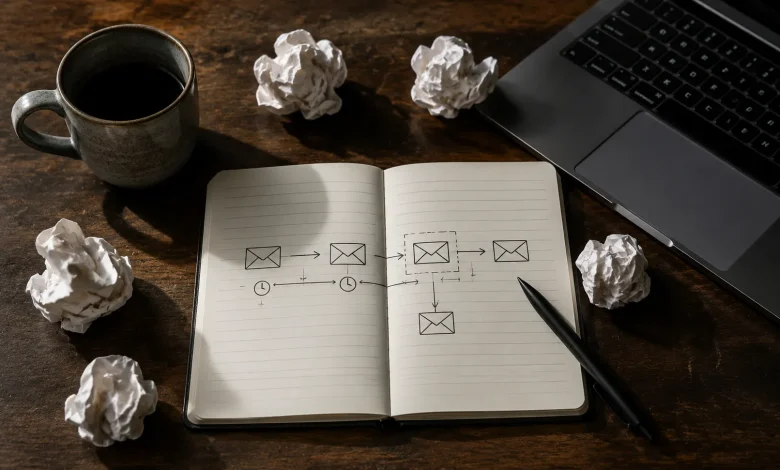
There’s a particular kind of dread that sales reps know well. You’ve spent forty minutes crafting what feels like a thoughtful outreach email, you hit send, and then nothing. A week later you send the follow-up. Still nothing. You run the sequence to its end, and the whole thing evaporates into the void. No reply, no bounce, not even a polite “not interested.” Just silence.
Most of the time, the problem isn’t your offer. It’s that your sequence reads exactly like every other sequence in that prospect’s inbox. The subject line promises value. The opener name-drops their company. The CTA asks for “just15 minutes.” It’s not wrong, exactly. It’s just completely forgettable.
The uncomfortable truth is that most B2B sales sequences are formatted for the sender’s convenience, not the reader’s psychology. They’re designed to be scalable, trackable, and easy to replicate which is great for operations but catastrophic for tone. When you optimize a sequence for volume, you almost always optimize the humanity right out of it.
Why Sequences Start Feeling Robotic Before You Write a Single Word
The format problem usually starts before anyone touches a keyboard. It starts with the template.
Templates are useful. Nobody is arguing otherwise. But there’s a version of template culture that trains salespeople to fill in variables rather than think about the actual human on the other end. You get sequences built around [FIRST_NAME] and [COMPANY_NAME] tokens, with a value prop in paragraph two and a soft CTA in paragraph three, every single time. The structure becomes so familiar that it stops registering as communication and starts feeling like paperwork.
What makes this worse is that buyers have been conditioned by years of exposure to these patterns. They know, within the first two sentences, whether they’re reading something written for them or something written for a segment they happen to belong to. And once they’ve made that determination, they’re gone. You can have the most relevant offer in the world, but if the frame around it screams “automated sequence,” you’ve already lost the read.
The fix isn’t to abandon structure it’s to break the visual and psychological signature of robotic outreach.
The Touch Cadence Is Part of the Message
One thing that rarely gets discussed in sequence formatting advice is timing as a form of tone. When you send matters almost as much as what you send, because the spacing between touches communicates intent.
A sequence that goes Day 1, Day 2, Day 4 feels frantic. It reads like a system firing on schedule rather than a person paying attention. A sequence with Day 1, Day 5, Day 12, Day 21 has a different texture entirely. There’s patience in it. The gaps between touches imply that you’re not just burning through a list you’re actually leaving room for the prospect to have a life, get busy, change priorities.
This isn’t just about not being annoying. It’s about signaling something about how you operate. Companies that respect a prospect’s attention during the sales process tend to earn a kind of trust that faster, more aggressive sequences never quite manage.
First Touch: The Hardest Email to Get Right
The opening email in a B2B sequence is where most formats collapse under the weight of trying to do too much. They’re attempting to introduce the sender, establish credibility, articulate the value prop, reference the prospect’s situation, and get a reply all in about 150 words. The result is a paragraph that sprints through every idea without landing on any of them.
A better approach is to pick one specific thing and build the entire email around it. Not one topic one specific thing. A detail you noticed about their recent product launch. A problem that’s very particular to their industry segment right now. A question that only makes sense if you’ve actually done your homework.
The specificity is what does the work. It signals that you’re not broadcasting you’re talking to them. And it creates a natural constraint that keeps the email short, because once you’ve made one sharp observation and asked one real question, there’s nothing left to say.
Length matters here too. Shorter is almost always better for first touch. Not because people are lazy readers, but because a concise email looks like it was sent by someone with something to say. A long email looks like it was sent by someone trying to justify the outreach.
The Follow-Up Problem Everyone Gets Wrong
Most sequence advice treats follow-ups as reminders. Bump to the top of the inbox, rephrase the original ask, add a little urgency. What this produces is a sequence where every email is basically the same email with different surface details.
The much more effective approach is to treat each follow-up as a new entry point. Each touch should carry its own weight a different angle, a different piece of evidence, sometimes even a different tone. The second email might share a specific customer story that’s relevant to their vertical. The third might drop the formality entirely and just ask a direct question. The fourth might link to something genuinely useful with no ask attached.
This structure does two things. It keeps the sequence from feeling like a machine cycling through variations on a script. And it gives different types of buyers a chance to engage on their own terms because some people respond to data, some respond to narrative, and some just respond when someone cuts through the pleasantries and asks a straight question.
Matching Format to Channel
Sequence design also has to account for where each touch happens. A LinkedIn message has different norms than a cold email. A voicemail has different constraints than both. Treating every channel like it’s just email-with-a-different-delivery-mechanism is one of the most common ways sequences start to feel inhuman.
LinkedIn messages should be even shorter than emails and should feel more conversational closer to how you’d message a professional acquaintance than how you’d write a pitch. Voicemails should sound like you made a real decision to call, not like you’re executing a task. Even the decision of when to introduce a phone call into the sequence carries meaning. Calling on day two of a sequence, before you’ve established any context, feels intrusive. Calling on day eight, after two or three thoughtful emails, feels like a natural next step.
The channel order in your sequence isn’t just logistics. It’s a pacing decision that shapes how the entire relationship feels.
The Language That Kills Good Sequences
There are phrases that have become so overused in B2B outreach that they now actively repel attention. “I wanted to reach out because.” “I noticed that.” “I’d love to connect.” “Just following up.” “Does this resonate?”
None of these are wrong by themselves. The problem is that they’ve been copied into so many sequences by so many tools that they’ve stopped carrying meaning. They’re filler that signals automation. When a prospect reads “I wanted to reach out because,” the part of their brain that recognizes patterns has already flagged this as a template before their eyes finish the sentence.
The alternative isn’t to be weird or gimmicky. It’s to write like someone who actually thought about the first word. Start with an observation rather than an introduction. Start with a question rather than a setup. Start with a number, a name, a specific date something that feels earned rather than generated.
The sequences that get replies aren’t usually the ones with the best value props. They’re the ones that read like a person actually wrote them, at a specific moment, for a specific reason. That’s not a talent. It’s a formatting decision. And it’s available to anyone willing to slow down long enough to make it.