Hooked on Luxury: The Dopamine Hit of the Ultimate Purchase
The Brain Doesn’t Know the Difference Between a Birkin and a Drug
There’s a moment that luxury shoppers know intimately. It happens right before the purchase not after, but in that suspended second when the decision has been made but the card hasn’t been swiped. The heart rate ticks up. Something warm moves through the chest. The world narrows to a single object: the watch in the glass case, the bag on the velvet stand, the car gleaming under showroom lights. Neuroscientists have a name for what’s happening. It’s a dopamine surge the same anticipatory rush that lights up the brain during gambling, falling in love, or hearing a song you haven’t heard in years. Luxury brands didn’t stumble onto this. They engineered it.
Understanding why we spend irrational sums on objects that perform the same function as cheaper alternatives requires going somewhere most brands would rather you didn’t look inside the architecture of desire itself. The answer isn’t vanity. It isn’t even status, exactly. It’s something older and stranger, wired into the reward circuitry that kept our ancestors alive on the savannah and now keeps them refreshing waitlists for limited-edition sneakers.
Anticipation Is the Real Product
Behavioral economists have long noted that the anticipation of a reward activates more dopaminergic activity than the reward itself. This isn’t a footnote. It’s the operating principle behind every luxury purchase experience ever designed.
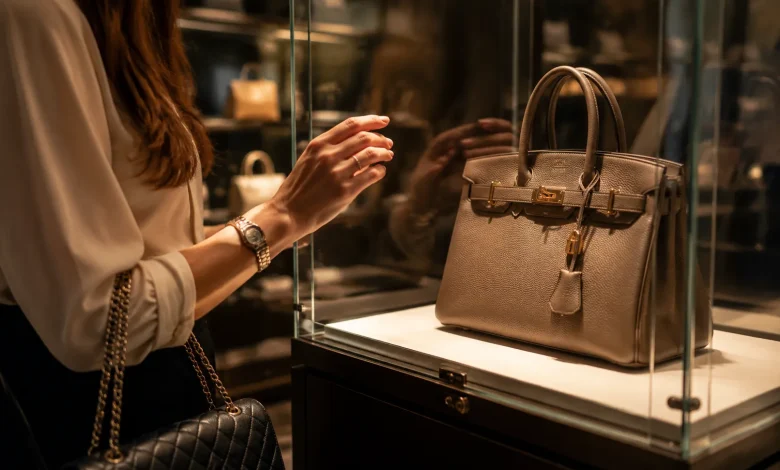
Consider how Hermès handles demand for its Birkin bags. The item is technically available if you have the money and the “relationship” with the brand. But you can’t simply walk in and buy one. You have to accumulate purchase history. You have to wait. You have to want it in a sustained, demonstrated way. This isn’t supply chain inefficiency. It’s a deliberate architecture of longing. Every obstacle placed between a customer and the object amplifies the neurological reward when that object is finally obtained. Hermès isn’t selling a bag. It’s selling the experience of wanting and eventually, mercifully having.
Apple does the same thing with hardware releases. So does Supreme with its weekly drops. So does every fine dining establishment that makes you book two months out. The scarcity might be real or manufactured; the brain doesn’t distinguish. What it registers is effort, exclusivity, and the sweetness of delayed gratification and it codes all of that into the value of the object itself.
Why Cheap Feels Hollow Even When It Works
Here’s the uncomfortable truth about luxury that nobody wants to say plainly: a $15watch tells time as accurately as a $15,000 one. A canvas tote carries groceries as effectively as a monogrammed leather holdall. The rational mind knows this. And yet the rational mind is not running the show.
When we acquire a luxury object, the brain doesn’t just register “I have a thing.” It registers the entire context of that acquisition the decision-making process, the weight of the price, the friction of the wait, the aesthetic ceremony of the purchase itself. Luxury retailers understand this deeply. The tissue paper, the ribbon, the branded bag within a bag, the salesperson who treats you as though you are the only customer who has ever walked through that door these are not accidents of tradition. They are the purchase experience functioning as ritual, and ritual is how the brain marks events as significant.
Cheap, by contrast, doesn’t trigger the same neural encoding. A fast fashion jacket bought during a late-night online scroll gets filed differently than a coat saved for across three months and finally purchased on a gray Tuesday morning in a boutique that smells faintly of cedar. The jacket might be warmer. But it won’t be remembered the same way. It won’t become part of the story you tell about yourself.
Status Is Biology, Not Shallowness
It has become fashionable in certain circles to dismiss luxury consumption as superficial the province of insecure people performing wealth for social approval. This critique is partially true and mostly misses the point. The drive to signal status through material objects isn’t a modern pathology. It’s evolutionary hardware.
In social species, the ability to acquire and display resources communicates fitness. In human prehistory, the equivalent of a Rolex might have been an elaborate headdress or a particularly fine weapon objects that said, with wordless clarity, I have more than I need, and that excess makes me a desirable ally or mate. Our neocortex has grown enormously since then. Our limbic system, which processes these signals, has barely changed. When you wear something that marks you as belonging to a certain tier of society, you’re not being shallow. You’re operating exactly as evolution designed you to.
What luxury brands have mastered is the translation of this biological signal into a modern commercial product. They don’t just sell the object; they sell the social information the object transmits. The little logo on the leather, the particular shade of orange in the box, the sound of a car door closing these are not design flourishes. They are recognition signals, tuned to be decoded instantly by anyone who knows the code and completely opaque to those who don’t. That opacity, incidentally, is part of the point. Exclusivity requires a boundary. The logo is both a welcome sign and a fence.
The Hangover Nobody Talks About
Here’s where the dopamine story gets complicated. The same neurochemical system that makes luxury desire so intoxicating also guarantees that possession will eventually disappoint. This is called hedonic adaptation the brain’s tendency to recalibrate its baseline upward after any positive experience, leaving you back where you started, only with higher expectations.
The watch that felt extraordinary on the wrist in week one becomes, by month three, simply the watch you wear. The car that made your pulse jump now idles in the driveway unremarkably. This isn’t ingratitude. It’s neurology. The brain is a prediction machine, and once a prediction is confirmed, it stops flagging the outcome as remarkable.
Luxury brands navigate this with deliberate model cycles, limited editions, and what the industry quietly calls the “next” culture the implicit promise that there is always another object just over the horizon that will restore the feeling. The customer doesn’t become jaded with luxury itself. They become jaded with what they currently own, which helpfully creates demand for what they don’t yet have. The dopamine loop restarts at the want phase, where it’s always most powerful.
When the Purchase Becomes the Identity
Perhaps the most psychologically complex dimension of luxury consumption is what happens over time, when objects stop being things you own and start being things you are. Researchers in consumer psychology refer to this as “self-extension” the process by which possessions become integrated into a person’s identity and self-concept.
This is why people speak about certain luxury purchases the way they speak about relationships. The watch their father left them. The bag they bought after the promotion. The car they drove when everything changed. Luxury objects, because of the emotional intensity surrounding their acquisition, become mnemonic anchors physical nodes in the story of a life. Losing them can feel genuinely like grief, which strikes non-luxury consumers as absurd until they examine what objects in their own life carry the same weight, because they always do, regardless of price point.
The brands that survive generations understand this. They don’t just sell you an object for who you are now. They sell you an artifact that will hold meaning for who you will become. That’s not marketing. That’s something closer to mythology and it turns out that human beings, ancient reward circuitry and all, are still very much in the market for myth.