Decoding the Aura: What Makes a Brand Truly Untouchable?
There’s a moment and most of us have felt it when you hold a product in your hands and realize you’re not just holding a product. You’re holding a story, a signal, a quiet declaration about who you are or who you want to be. That’s not marketing. That’s something harder to manufacture, and far harder to sustain.
We call it brand aura. And it’s one of the most misunderstood phenomena in modern business.
It’s Not What They Sell. It’s What They Represent.
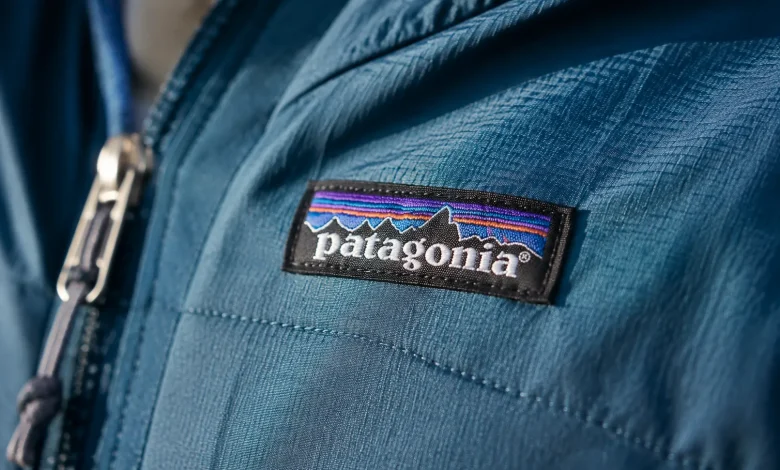
Patagonia doesn’t just sell outdoor gear. It sells moral seriousness the idea that a company can exist in opposition to rampant consumerism while still asking you to buy its $300 fleece. The contradiction is intentional and strangely compelling. There’s a coherence to it, even in its tension.
Hermès doesn’t flood the market. It restricts access so deliberately that the waiting list for a Birkin has become part of the mythology. You’re not simply buying a bag; you’re earning admission to a world that doesn’t particularly need you in it. The exclusivity isn’t an accident it’s the product.
What these brands share isn’t a clever tagline or a well-optimized Instagram grid. It’s a point of view, expressed consistently and unapologetically over time. They know exactly what they stand for, and they’re willing to alienate the people who don’t get it. That willingness to lose customers is, paradoxically, part of what makes them magnetic.
The Danger of Being Liked by Everyone
Here’s where a lot of brands lose the thread. In trying to appeal to the widest possible audience, they sand down every edge, soften every opinion, and end up standing for nothing that couldn’t be written on a corporate values poster.
“Innovation. Integrity. Community.” Sure. But so does every other company on the planet.
Untouchable brands carry a kind of friction. They make some people roll their eyes. Apple’s most devoted critics are as passionate as its fans, and Apple has never once tried to convert them. Supreme built its entire identity on the premise that most people won’t get it and that the ones who do form a tribe defined partly by that shared understanding.
Friction isn’t a sign of failure. Often, it’s the proof that something real is happening.
Trust Is Built in Boring Times
It’s easy to maintain brand credibility during a product launch or a cultural moment. The harder test is consistency when nothing particularly interesting is happening when there’s no crisis to respond to, no trend to ride, no big campaign in market.
Johnson & Johnson survived the 1982Tylenol poisoning crisis not because of its PR response alone, but because it had built decades of consumer trust before that moment ever arrived. When the crisis hit, they had something to spend. They pulled every bottle off shelves nationwide, at enormous cost, and the public believed them because their prior behavior had earned that belief.
That’s what consistent brand behavior does over time. It accumulates. You don’t notice it day to day, any more than you notice compounding interest on a savings account. But when it matters during a scandal, a misstep, a cultural reckoning the balance is either there or it isn’t.
Brands that chase trends spend that equity without realizing it. They pivot to causes when it’s convenient, post the black square, release the statement, and move on. Audiences notice. They may not articulate it, but they feel the inauthenticity the way you feel a handshake that’s just slightly too firm.
The Aesthetic Is the Argument
Visual identity is often treated as decoration. It isn’t. It’s communication at a pre-verbal level the first thing a person feels before they’ve read a single word.
Consider the restrained, almost brutalist simplicity of Muji. Every product, every package, every shelf arrangement communicates the same thing: we stripped away everything unnecessary, and what’s left is enough. The aesthetic is the brand philosophy made tangible. You don’t need to read their mission statement. You feel it walking through the store.
Or think about how Rolex presents itself. The photography is always the same: deep shadows, dramatic single-source lighting, a watch face filling the frame with almost aggressive confidence. There’s no humor, no irony, no winking at the camera. They have been telling the same visual story for seventy years, and it has never once felt stale, because the underlying idea mastery, permanence, achievement doesn’t age.
The brands that try to refresh their aesthetics every few years to stay “current” are, in a quiet way, admitting that their identity lives in the surface. When the surface changes constantly, there’s nothing underneath to hold onto.
Founder Energy and the Problem of Scale
Many of the most untouchable brands carry the psychic imprint of a founder someone whose specific obsessions and contradictions gave the company its original texture. Coco Chanel’s complicated relationship with femininity and power is woven into the DNA of the brand she built. Steve Jobs’s pathological perfectionism and rejection of market research produced Apple’s most defining products. Ralph Lauren’s entire life project a Bronx-born kid constructing and inhabiting an aspirational American aristocracy is Polo’s actual content.
The interesting challenge comes when these founders leave, and the brand has to decide whether to preserve the original spirit or evolve beyond it. This is the moment when you discover whether the identity was ever truly institutionalized or whether it was just one person’s personality wearing a logo.
Gucci’s creative direction under Alessandro Michele demonstrated that a brand can reinvent itself radically while remaining coherent because the reinvention honored something deep in the original, even as it discarded the surface. The maximalism, the Italian theatricality, the romance with the outsider all of it sat within a lineage. It felt like a reunion rather than a renovation.
What Can’t Be Copied
Here’s the uncomfortable truth for anyone trying to build something untouchable from scratch: the most powerful brand assets can’t be purchased, engineered, or reverse-engineered on a timeline. Time itself is the ingredient.
Loewe has existed since 1846. Brooks Brothers dressed Abraham Lincoln to his assassination. These aren’t just facts they’re permissions. They allow a brand to make claims about durability and heritage that no startup can credibly make, no matter how well-funded.
But heritage alone is inert without a living culture to activate it. Plenty of old brands are just old. What separates the untouchable ones is that they’ve managed to keep the inheritance in conversation with the present not chasing it, not ignoring it, but maintaining a genuine dialogue between what they were and what they are.
That dialogue between origin and now, between the brand’s self-concept and the world’s perception of it is where aura actually lives. It’s not a logo. It’s not a price point. It’s not even a story, exactly.
It’s more like a reputation that has earned the right to whisper.